How Pets Improve Children's Reading Skills and Literacy Development
In an era where screens dominate children's attention, finding engaging ways to foster literacy is more crucial than ever. While traditional methods like phonics and leveled readers remain staples, a growing body of research highlights an unlikely yet profoundly effective ally: pets. From dogs to cats, rabbits to guinea pigs, animals are transforming how children approach reading, turning a potentially stressful activity into a comforting, joyful experience. This article delves into the scientific evidence, mechanisms, and practical applications of using pets to boost children's reading skills, literacy development, and overall confidence.
The concept isn't new. Programs like Reading Education Assistance Dogs (R.E.A.D.), launched by Intermountain Therapy Animals in 1999, have long demonstrated that children who read aloud to trained therapy dogs show significant improvements in reading fluency, comprehension, and attitude toward reading. A landmark study by the University of California, Davis found that children who participated in a reading-to-dogs program gained an average of 12 months of reading progress in just ten weeks, compared to a control group. The findings, published in the Journal of Veterinary Behavior, underscore the powerful human-animal bond in educational contexts.
The Science: Why Pets Boost Literacy
Several interconnected mechanisms explain why reading to pets works so effectively. First, the presence of a calm, non-judgmental animal reduces a child's stress and anxiety—two major barriers to learning. When children feel nervous about making mistakes, their cognitive load increases, impairing comprehension and recall. Pets, particularly dogs, offer unconditional acceptance; they do not correct pronunciation or criticize pace. This safety net allows children to practice without fear, building automaticity in decoding and expression.
Second, the act of reading aloud to a pet provides intrinsic motivation. Children often perceive it as a game or a special bonding time rather than a chore. According to a 2017 study by the Tufts Institute for Human-Animal Interaction, the mere presence of a dog increased children's willingness to read and persisted longer in reading tasks compared to reading alone or to a peer. The study noted that children exhibited lower cortisol levels (a stress hormone) and higher oxytocin levels (a bonding hormone) during reading sessions with dogs, creating a positive feedback loop that enhances learning.
Third, pets facilitate a relaxed physiological state conducive to learning. The simple act of stroking a dog or cat can lower heart rate and blood pressure, shifting the body from a fight-or-flight to a rest-and-digest mode. This parasympathetic activation opens neural pathways for encoding new information. A 2019 paper in Frontiers in Psychology emphasized that animal-assisted interventions optimize arousal levels, allowing children to focus better and retain more material.
Real-World Applications: Programs That Work
Beyond R.E.A.D., numerous programs worldwide harness the power of pets. The Bark and Read Foundation in the UK partners with schools to bring therapy dogs into classrooms for one-on-one reading sessions. As reported by the National Literacy Trust, 76% of teachers observed improved reading confidence in students after just six sessions with a dog. In Australia, the Story Dogs program places trained volunteers and their dogs in primary schools, reaching over 8,000 children annually. Evaluations show that 9 out of 10 children make measurable gains in reading ability within a year.
Even classroom pets like guinea pigs or rabbits can play a role. A study by the Purdue University College of Veterinary Medicine found that children who read to guinea pigs showed a 20% increase in reading accuracy compared to those who read to a stuffed animal or alone. The key is the living, breathing creature that provides sensory feedback—warm fur, gentle movements—which grounds the child in the present moment and reduces distractions.
How to Get Started: Tips for Parents and Educators
If you're considering integrating a pet into a child's reading practice, safety and planning are paramount. Always use a calm, well-trained animal that has passed temperament assessments. Dogs should be certified therapy animals through organizations like American Kennel Club Canine Good Citizen or Therapy Dogs International. For smaller pets, ensure the child is taught gentle handling.
Set up a quiet, comfortable corner with a cushion for the child and a bed for the pet. Let the child choose the book—even if it's a favorite they've read many times—because repetition builds confidence. Encourage the child to read aloud naturally; the pet doesn't care about mistakes! Some children like to follow the words with a finger while the pet watches, mimicking the act of shared reading.
Monitor progress subtly. Celebrate improvements in fluency, expression, and willingness to read, not just number of pages. Many therapy dog handlers keep simple logs noting the child's growing confidence, which can be shared with parents and teachers. Remember, the goal is to foster a lifelong love of literacy, not to create a competitive reader overnight.
Potential Challenges and Considerations
While the benefits are substantial, pet-assisted reading isn't a one-size-fits-all solution. Allergies, fear of animals, or cultural considerations may limit participation. Schools should offer alternative reading experiences for children who prefer not to work with animals. Also, ensure that the pet's welfare is prioritized; reading sessions should be short (15-20 minutes) with breaks to prevent stress for the animal.
Additionally, research emphasizes that therapy pets are not interchangeable with family pets. While reading to a family dog can be beneficial, the animal must be reliable and calm around children. A 2023 study from the University of California, Davis School of Veterinary Medicine cautioned that untrained dogs might become anxious or distracted, undermining the intervention's effectiveness. Therefore, formal training and certification are recommended.
The Bigger Picture: Beyond Reading Scores
The ripple effects of pet-assisted reading extend far beyond literacy metrics. Children involved in these programs often develop stronger empathy, responsibility, and social skills. They learn to interpret an animal's non-verbal cues—the twitch of an ear, a tail wag—which enhances their emotional intelligence. Many children who struggled with reading develop a newfound passion for books, even volunteering to read to their pets at home. This intrinsic motivation is the ultimate goal, as it predicts long-term academic success and personal fulfillment.
Moreover, the bond formed with a reading companion can be therapeutic for children facing trauma, anxiety, or social isolation. A dog's steady presence offers comfort that words alone cannot provide. As one child in the R.E.A.D. program put it, "My dog doesn't judge me. He just listens. That's why I love reading to him." Such testimonials remind us that literacy is not just about decoding symbols—it's about connection, communication, and trust.
Conclusion: A Tail-Wagging Approach to Literacy
The evidence is clear: pets, especially therapy dogs, are powerful catalysts for children's reading development. They reduce anxiety, boost confidence, and create a warm, inviting environment that transforms reading from a chore into a joy. As schools and families seek innovative, compassionate ways to nurture young readers, the simple act of curling up with a furry friend might be one of the most effective tools available. Whether through formal programs or casual home sessions, the human-animal bond offers a pathway to literacy that is both scientifically sound and profoundly human.
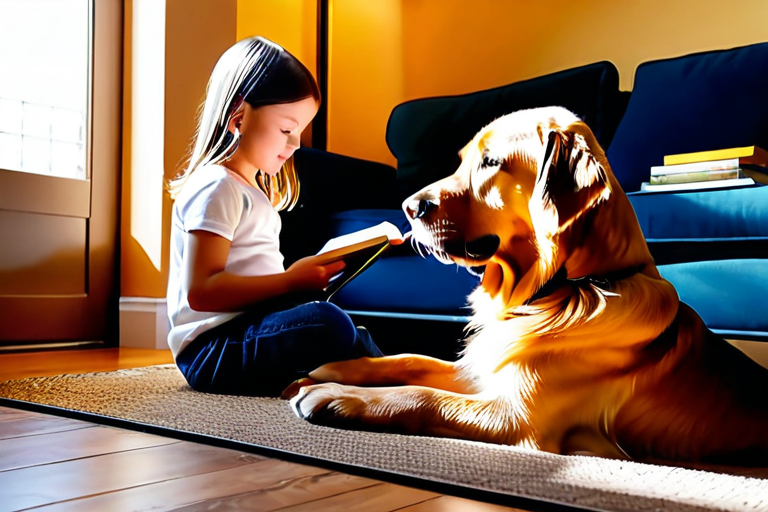
Image generated with AI assistance: child and dog reading scene in cozy living room.
References: Intermountain Therapy Animals, University of California Davis, Tufts Institute for Human-Animal Interaction, National Literacy Trust, Purdue University, AKC Canine Good Citizen.