The Evolutionary Journey of Domesticated Felines: From Wild Hunters to Household Companions
Domestication represents one of humanity's most significant evolutionary partnerships. While dogs have long been recognized as our first domesticated companions, the story of cat domestication reveals a more complex, mutualistic relationship that developed over millennia.
Archaeological Origins in the Fertile Crescent
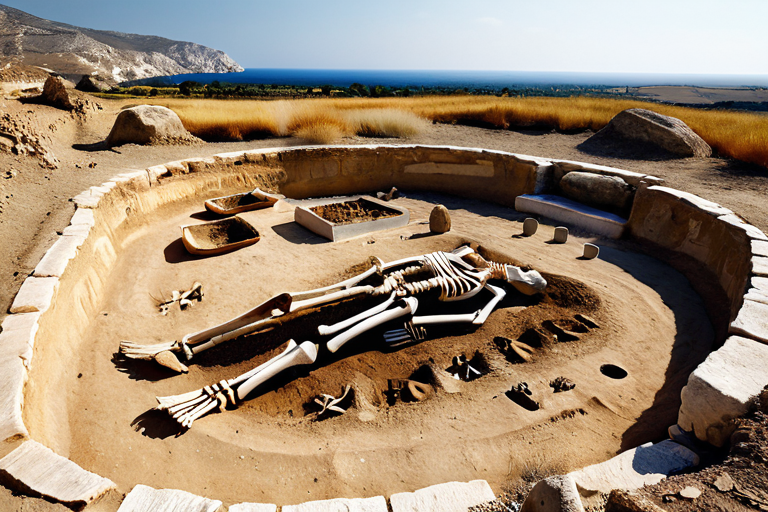
Archaeological evidence from Cyprus reveals early human-feline relationships dating back 9,500 years
The earliest concrete evidence of cat domestication comes from the island of Cyprus, where archaeologists discovered a 9,500-year-old burial containing both human and feline remains. This discovery, published in the journal Nature, suggests that cats had already established a relationship with humans by this period, likely transported deliberately to the island by Neolithic farmers.
Further evidence emerged from the Near East, particularly in what is now Turkey and Syria. Research from the University of Leuven indicates that wildcats (Felis silvestris lybica) began frequenting early agricultural settlements around 10,000 years ago, attracted by rodent populations that thrived in grain storage areas. This created a natural symbiotic relationship: cats controlled pests, while humans provided a reliable food source.
Genetic Evidence and Evolutionary Pathways
A groundbreaking 2007 study published in Science analyzed mitochondrial DNA from 979 domestic cats and their wild relatives worldwide. The research revealed that all domestic cats descend from at least five female ancestors of the Near Eastern wildcat subspecies. This genetic bottleneck suggests domestication occurred in a specific region before cats spread globally through human migration and trade routes.
Key Genetic Changes During Domestication
- Reduced fear response: Selection for tameness affected neural crest cell development
- Coat color variations: Emergence of tabby, solid, and pointed patterns not found in wild populations
- Social behavior genes: Modifications in oxytocin and vasopressin receptor systems
- Digestive adaptations: Enhanced ability to process starches from human food sources
Unlike dogs, which underwent significant morphological changes during domestication, cats retained much of their ancestral form and hunting abilities. According to research from the National Institutes of Health, this suggests that humans valued cats primarily for their existing traits rather than selecting for specific new characteristics.
Behavioral Evolution: From Solitary Hunters to Social Companions
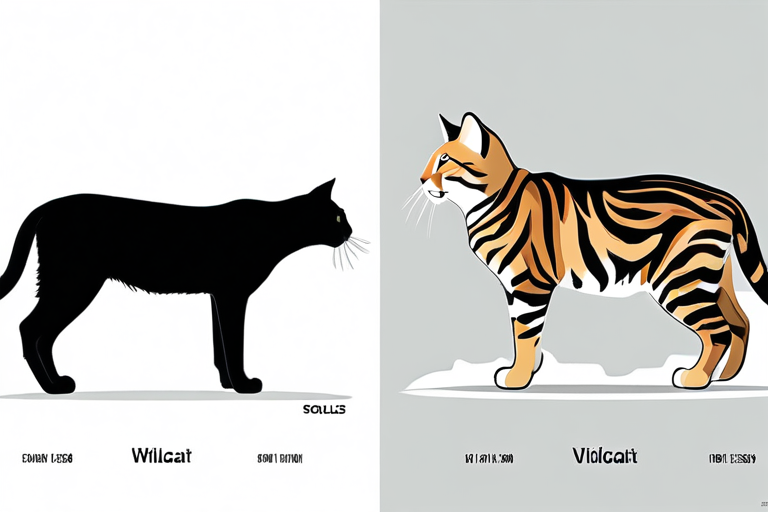
Behavioral adaptations show how domestic cats developed social flexibility while retaining hunting instincts
Wildcats are typically solitary, territorial animals with limited social structures. Domestic cats, however, have developed remarkable behavioral plasticity. Studies from the University of Lincoln demonstrate that domestic cats can form complex social hierarchies in multi-cat households and have evolved sophisticated communication methods specifically for interacting with humans.
The most significant behavioral adaptation is the development of the "solicitation purr" or "solicitation meow." Research published in Current Biology reveals that domestic cats have developed vocalizations that incorporate frequencies similar to human infant cries, which humans find particularly difficult to ignore. This represents a clear example of co-evolution, where cats have adapted their communication to better interact with their human companions.
Cultural Significance Through History
The relationship between humans and cats has fluctuated dramatically across cultures and historical periods. In ancient Egypt, cats were revered and protected by law, with the goddess Bastet depicted as a lioness or domestic cat. The British Museum houses numerous artifacts demonstrating the sacred status of cats in Egyptian society, including mummified cats buried with honors.
Ancient Egypt (3000 BCE - 30 BCE)
Cats were protected by law, with penalties for harming them. They were associated with protection, fertility, and the home.
Medieval Europe (500 - 1500 CE)
Cats were often associated with witchcraft and superstition, leading to persecution during certain periods.
Age of Exploration (1400 - 1800)
Cats became essential ship companions, controlling rodents on long voyages and spreading globally.
During the Middle Ages in Europe, cats faced persecution due to associations with witchcraft, particularly documented in the Malleus Maleficarum. However, their practical value as pest controllers ensured their survival. The Age of Exploration saw cats spread worldwide aboard ships, where they served crucial roles in protecting food supplies from rodents.
Modern Domestication and Breed Development
The 19th century marked the beginning of systematic cat breeding and the development of distinct breeds. The first cat show was held at London's Crystal Palace in 1871, organized by Harrison Weir, who established many of the standards still used today. Unlike dogs, which were bred for specific working functions, most cat breeds were developed primarily for aesthetic characteristics.
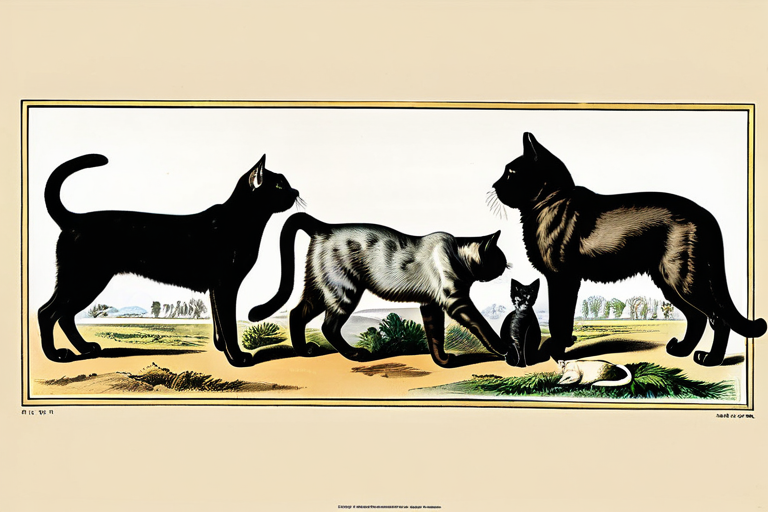
Early cat breed development focused on aesthetic traits while maintaining essential feline characteristics
Modern genetic research from the Broad Institute has revealed that despite the development of numerous breeds with distinct appearances, domestic cats retain approximately 95% of their wildcat genetics. This genetic conservation explains why even the most pampered house cats retain excellent hunting instincts and physical capabilities similar to their wild ancestors.
The Human-Cat Bond: Neurobiological Perspectives
Recent research has begun to unravel the neurobiological mechanisms underlying the human-cat bond. Studies published in Frontiers in Psychology demonstrate that interacting with cats increases oxytocin levels in humans, similar to parent-child bonding. Cats, in turn, have been shown to respond positively to human social cues, following pointing gestures and recognizing their names when called.
Research Insights from Recent Studies
A 2021 study from Oregon State University found that cats form attachment bonds with their caregivers similar to human infants and dogs. The research, published in Current Biology, demonstrated that approximately 65% of cats displayed secure attachment styles when separated from and reunited with their owners.
This bonding has measurable health benefits for humans. According to the Centers for Disease Control and Prevention, cat ownership is associated with reduced stress, lower blood pressure, and decreased risk of cardiovascular disease. The rhythmic frequency of a cat's purr (between 25-150 Hz) has even been studied for its potential therapeutic effects on bone density and healing.
Future Directions in Feline Research
Current research initiatives are exploring several promising areas in feline domestication science. The Feline Genetics Laboratory at the University of Missouri is mapping genetic markers associated with health conditions, behavior traits, and evolutionary history. Meanwhile, cognitive research continues to reveal surprising capabilities in feline intelligence, including object permanence understanding and basic numerical competence.
As we continue to unravel the complex history of cat domestication, it becomes increasingly clear that this relationship represents a unique evolutionary pathway. Unlike the directed domestication of many other species, cats essentially domesticated themselves, choosing to live alongside humans while maintaining much of their wild independence. This mutualistic relationship, developed over ten millennia, continues to evolve today as we gain deeper understanding of our feline companions through scientific research and shared experience.
Key Takeaways
- Cat domestication began approximately 10,000 years ago in the Fertile Crescent
- Genetic evidence points to five female wildcat ancestors for all domestic cats
- Cats domesticated themselves through mutual benefit with early agricultural societies
- Behavioral adaptations include specialized vocalizations for human communication
- Modern domestic cats retain 95% of their wildcat genetics despite breed development
- The human-cat bond involves measurable neurobiological and health benefits