The Evolutionary Puzzle of Pet Domestication: Unraveling How Wild Animals Became Our Companions
From fierce wolves prowling ancient landscapes to the gentle dogs sleeping at our feet, the journey of animal domestication represents one of humanity's most profound evolutionary partnerships. This transformation didn't happen overnight but through millennia of selective pressure, behavioral adaptation, and mutual benefit.
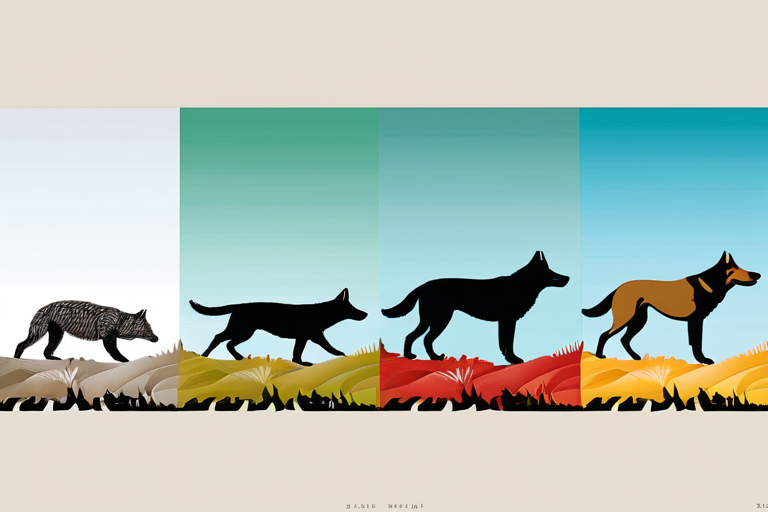
Visual representation of the evolutionary journey from wild ancestors to domesticated companions
The Genetic Blueprint of Domestication
Modern genetic research has revealed fascinating insights into how domestication reshaped animal genomes. According to studies published in Nature, domesticated animals show distinct genetic signatures compared to their wild counterparts. These changes affect everything from coat color and size to behavioral traits like aggression and sociability.
The Science journal highlights that domestication syndrome—a cluster of traits including floppy ears, reduced brain size, and juvenile physical features—appears across multiple domesticated species. This suggests common genetic pathways were activated during the domestication process, possibly through selection for tameness and reduced fear responses.
Key Genetic Changes:
- Reduced amygdala size affecting fear responses
- Altered serotonin pathways influencing aggression
- Changes in thyroid hormone regulation affecting metabolism
- Modified neural crest cell development creating physical changes
Behavioral Evolution: From Survival to Companionship
Behavioral changes represent perhaps the most dramatic aspect of domestication. Research from the Max Planck Institute demonstrates that domesticated animals have evolved enhanced social cognition abilities. Dogs, for instance, have developed unique skills in reading human gestures and facial expressions—abilities their wolf ancestors lack despite similar intelligence levels.
Behavioral differences between wild ancestors and domesticated descendants
The transition from survival-focused behaviors to companionship-oriented traits involved multiple evolutionary pressures. Animals that displayed reduced aggression, increased tolerance for human proximity, and enhanced communication skills were more likely to be kept and bred by early human societies. This created a feedback loop where behavioral traits favoring human interaction became genetically reinforced over generations.
The Timeline of Transformation
Archaeological evidence reveals that domestication occurred at different times and places for various species. The Proceedings of the National Academy of Sciences documents these key milestones:
| Species | Approximate Domestication Date | Region of Origin |
|---|---|---|
| Dogs (Canis familiaris) | 15,000-40,000 years ago | Eurasia |
| Cats (Felis catus) | 9,000-10,000 years ago | Near East |
| Rabbits (Oryctolagus cuniculus) | 1,400 years ago | France |
| Guinea Pigs (Cavia porcellus) | 3,000-6,000 years ago | Andes Mountains |
These timelines reveal that domestication wasn't a single event but a process that unfolded differently across species and cultures. Early domestication often began with commensalism—animals living near human settlements to access food scraps—which gradually evolved into mutualism and eventually full domestication.
The Role of Artificial Selection
While natural selection shaped wild species, artificial selection—human-directed breeding—drove the rapid evolution of domesticated traits. The Royal Society notes that this process accelerated dramatically in recent centuries with the development of breed standards and systematic breeding programs.
Historical methods of selective breeding that shaped modern pet breeds
Artificial selection created remarkable diversity within domesticated species. From the tiny Chihuahua to the massive Great Dane, all dogs share common wolf ancestry but have been shaped by human preferences for specific traits. This process continues today with new breeds emerging and existing breeds being refined for health, temperament, and appearance.
"The domestication of animals represents one of the most significant transitions in human history, creating relationships that have shaped both our societies and the animals themselves. It's a story of co-evolution where both species changed in response to each other."
— Dr. James Serpell, University of Pennsylvania
Modern Implications and Future Directions
Understanding domestication has practical implications for modern pet care. Research published in Applied Animal Behaviour Science suggests that recognizing the evolutionary history of pets can help address behavioral issues and improve welfare. For instance, understanding a dog's wolf ancestry explains certain instincts like digging, chasing, and pack behavior.
Future research directions include:
- Epigenetic studies of how environment influences gene expression in domesticated animals
- Comparative analyses of domestication across different cultural contexts
- Investigations into how domestication affects animal cognition and emotion
- Studies of feral populations to understand reversibility of domesticated traits
Evolutionary Legacy in Our Homes
The pets sharing our homes today carry within them thousands of years of evolutionary history. Their behaviors, physical traits, and even their ability to form bonds with humans are the products of this remarkable journey from wild animal to companion. As we continue to study domestication, we gain not only scientific knowledge but also deeper appreciation for the complex relationships we've built with other species.
This evolutionary partnership continues to evolve, with modern breeding practices, changing human lifestyles, and new scientific understanding shaping the future of human-animal relationships. The story of domestication reminds us that our pets are not just animals we keep but partners in an ancient, ongoing evolutionary dance.
Further Reading & Research Sources:
- Nature: Genome sequencing highlights the dynamic early history of dogs
- Science: The domestication of animals
- Current Biology: The social dog: history and evolution
- PNAS: Archaeological evidence for early cat domestication
- Philosophical Transactions B: Animal domestication in the era of ancient genomics