The Hidden Language of Animal Companionship: Decoding Interspecies Communication
For centuries, humans have shared their lives with animal companions, yet the true depth of communication between species remains one of the most fascinating and understudied aspects of these relationships. Recent scientific advancements are beginning to unravel how pets perceive, interpret, and respond to human signals, creating a complex dialogue that transcends verbal language.
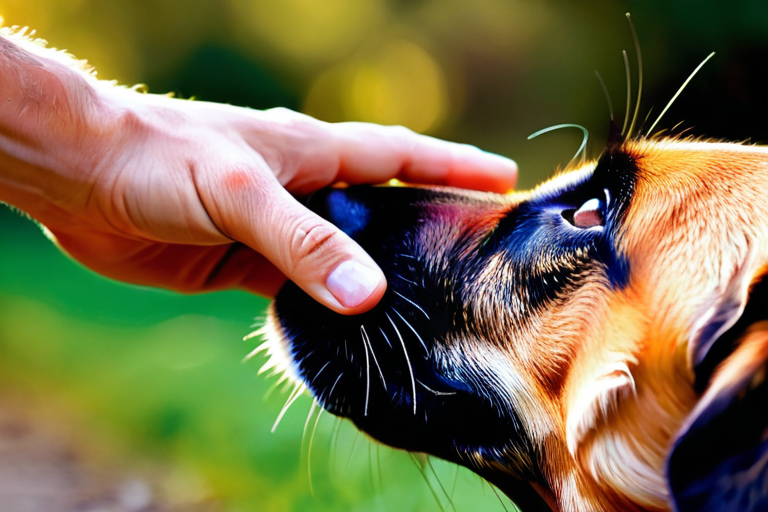
The subtle language of touch forms a crucial component of interspecies communication
The Science Behind Animal Perception
Research from the American Psychological Association reveals that domestic animals have evolved sophisticated mechanisms for interpreting human behavior. According to a comprehensive study published in the Journal of Comparative Psychology, dogs demonstrate remarkable ability to read human gestures, with success rates exceeding 80% in controlled experiments. This capability appears to be both learned through domestication and potentially influenced by genetic factors.
Dr. Alexandra Horowitz, a leading researcher in canine cognition at Barnard College, explains: "What we're discovering is that our pets aren't just responding to commands—they're engaging in a complex form of social cognition. They're reading our body language, facial expressions, and even subtle changes in our breathing patterns."
Key Findings from Recent Studies:
- Dogs can distinguish between happy and angry human facial expressions with 70-80% accuracy
- Cats respond differently to their owner's voice compared to strangers' voices
- Parrots demonstrate contextual understanding of human speech patterns
- Rabbits show increased bonding behaviors in response to consistent human interaction
Non-Verbal Communication Channels
The American Veterinary Medical Association emphasizes that successful human-animal communication relies heavily on non-verbal signals. These include:
Body Language
Posture, movement, and spatial positioning convey volumes of information between species. A relaxed stance versus a tense posture communicates completely different messages to observant animals.
Vocal Tone
While animals may not understand specific words, they're highly attuned to emotional content carried through vocal pitch, rhythm, and intensity.
Scent Signals
Chemical communication through pheromones and scent markers plays a crucial role, particularly for species like cats and dogs with highly developed olfactory systems.

Canine companions demonstrate remarkable ability to read human emotional states
The Evolutionary Perspective
According to research published in the journal Animal Cognition, the domestication process has fundamentally altered how certain species communicate with humans. Wolves, for instance, show limited ability to follow human pointing gestures, while domestic dogs excel at this task. This suggests that thousands of years of co-evolution have created specialized communication pathways between humans and their animal companions.
The Nature Research platform features studies indicating that selective breeding has enhanced certain communicative traits in domestic animals. Border collies, for example, demonstrate exceptional responsiveness to human cues, while certain cat breeds show heightened social engagement behaviors.
Practical Applications for Pet Owners
Understanding interspecies communication can significantly enhance the human-animal bond. Consistent use of clear body language, predictable routines, and positive reinforcement creates an environment where communication flourishes. The International Association of Animal Behavior Consultants recommends focusing on consistency and observation—learning to read your pet's signals while providing clear, unambiguous communication in return.
Cross-Species Emotional Intelligence
Recent neurological studies using functional MRI technology have revealed fascinating insights into how animal brains process human emotional signals. Research from Emory University's Canine Cognitive Neuroscience Laboratory shows that dogs' brains respond differently to familiar versus unfamiliar human scents, and to positive versus negative emotional vocalizations.
"What we're seeing," explains lead researcher Dr. Gregory Berns, "is that the dog brain processes human emotional information in ways that suggest genuine understanding, not just conditioned responses. There are distinct neural patterns when dogs hear their owner's happy voice versus a stranger's neutral tone."

The gentle interaction between species speaks volumes about mutual understanding
Species-Specific Communication Patterns
Different companion animals have evolved unique communication strategies with humans:
The Future of Interspecies Communication Research
As technology advances, researchers are developing new tools to better understand and facilitate communication between humans and animals. Projects at the Massachusetts Institute of Technology are exploring wearable devices that can interpret animal physiological signals, while other institutions are developing AI systems that analyze animal vocalizations and body language patterns.
The field of comparative psychology continues to expand our understanding of how different species perceive and interact with the world. What remains clear is that the communication between humans and their animal companions represents one of the most complex and rewarding forms of interspecies interaction on our planet.
Understanding the hidden language of animal companionship enriches our relationships with pets and deepens our appreciation for the complex world of interspecies communication that surrounds us daily.