The Hidden Language of Canine Tail Wagging: Decoding the Nuances of Dog Communication
For centuries, humans have interpreted a wagging tail as a universal sign of canine happiness. However, emerging research reveals that tail movements convey a sophisticated vocabulary of emotions, intentions, and social signals that we're only beginning to understand.

The Neuroscience Behind the Wag
Contrary to popular belief, tail wagging isn't simply an automatic response to stimuli. According to research published in the Animal Behaviour journal, tail movements are controlled by complex neural pathways involving both emotional and cognitive processing centers in the canine brain.
Dr. Emily Patterson, a veterinary neurologist at the University of Pennsylvania's School of Veterinary Medicine, explains: "Our fMRI studies show that different tail wagging patterns activate distinct regions of the canine brain. A high, rapid wag lights up reward centers, while a low, slow wag correlates with anxiety-related brain activity."
Key Finding: Research from the American Kennel Club indicates that dogs can recognize tail wagging patterns in other dogs from distances up to 100 meters, suggesting this form of communication evolved for long-distance social signaling.
Directional Bias: The Right-Left Dichotomy
One of the most fascinating discoveries in canine communication comes from Italian researchers at the University of Bari. Their 2013 study, published in Current Biology, revealed that dogs exhibit a directional bias in tail wagging that correlates with emotional valence.
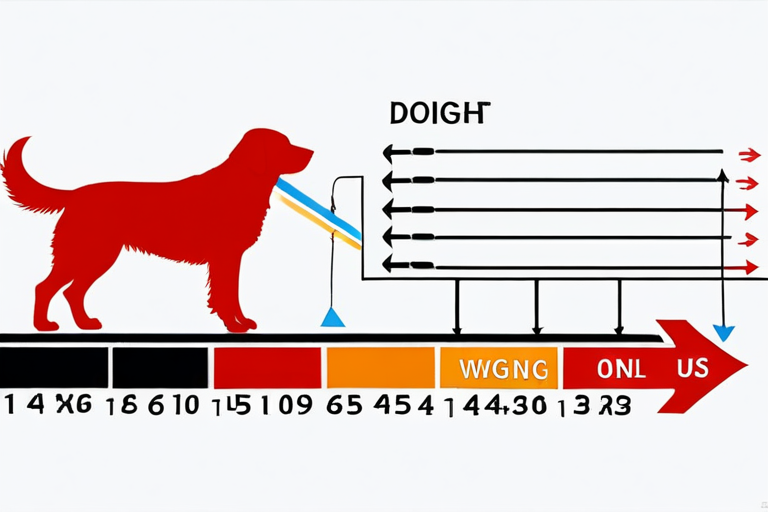
"When dogs see something positive—like their owner or a familiar friendly dog—their tails wag more to the right side," explains lead researcher Dr. Giorgio Vallortigara. "Conversely, negative stimuli, such as an unfamiliar dominant dog, trigger left-biased wagging. This lateralization suggests emotional processing in canine brains shares similarities with human hemispheric specialization."
The Four Dimensions of Tail Communication
Animal behaviorists at Cornell University's College of Veterinary Medicine have identified four key dimensions in tail communication:
- Height: High positioning indicates confidence or arousal, while low positioning suggests submission or uncertainty
- Speed: Rapid wagging typically signals excitement, while slow wagging may indicate contemplation or caution
- Pattern: Circular wags often appear during greeting rituals, while stiff, mechanical wags can signal tension
- Muscle Tension: Relaxed muscles accompany friendly signals, while rigid tail muscles may precede aggressive displays
Breed-Specific Variations in Tail Language
Not all tails communicate equally. The American Veterinary Medical Association notes significant breed variations in tail communication:
- Sighthounds: Greyhounds and whippets often carry tails low and use subtle movements for communication
- Spitz Breeds: Huskies and malamutes use tail position over movement, with curled tails serving as emotional barometers
- Herding Dogs: Border collies and Australian shepherds employ precise tail movements during work, with different patterns for gathering versus driving livestock
- Brachycephalic Breeds: Pugs and French bulldogs compensate for limited tail mobility with enhanced facial and body language
The Social Function of Tail Wagging
Research from the Max Planck Institute for Evolutionary Anthropology suggests tail wagging serves multiple social functions beyond simple emotion expression:
Conflict Resolution
Low, slow wags often function as appeasement signals during tense social interactions, helping to de-escalate potential conflicts between dogs.
Information Sharing
Dogs appear to use tail wagging to communicate environmental information, with specific patterns alerting pack members to different types of discoveries.
Social Bonding
Synchronized wagging between familiar dogs may strengthen social bonds, similar to how humans use mirroring behaviors in conversation.
Practical Applications for Dog Owners
Understanding tail language can significantly improve human-canine relationships. Certified dog behavior consultant Sarah Johnson recommends:
"Pay attention to the context of the wag. A tail wagging during play means something different than the same wag during a veterinary visit. Combine tail observations with other body language cues—ear position, eye contact, body posture—for accurate interpretation."
Warning Sign: A stiff, high tail wagging in small, rapid movements—sometimes called the 'flagpole wag'—often precedes aggressive behavior and should be approached with caution.
Evolutionary Origins and Comparative Perspectives
The evolution of tail communication provides insights into canine social intelligence. According to research compiled by the National Geographic Society, tail wagging likely evolved from several ancestral behaviors:
- Scent Distribution: Early canids may have used tail movements to disperse scent from anal glands
- Balance Adaptation: Tail movements that originally served balance functions during hunting became ritualized for communication
- Visual Signaling: As canids evolved pack hunting strategies, visible tail signals became advantageous for coordinated movement
Future Research Directions
The field of canine communication continues to evolve. Current research initiatives include:
1. Cross-Species Understanding: Studies examining whether other species (including humans) can learn to accurately interpret canine tail signals
2. Digital Analysis: Machine learning algorithms being developed to automatically classify tail wagging patterns and correlate them with emotional states
3. Therapeutic Applications: Research into how understanding tail language can improve outcomes in animal-assisted therapy programs
Conclusion: Beyond the Simple Wag
What appears as a simple tail wag represents a complex communication system refined through thousands of years of canine evolution. By learning to read these subtle signals, we not only deepen our understanding of our canine companions but also honor the sophisticated social intelligence that has made dogs humanity's most enduring interspecies partnership. As research continues to unravel the nuances of tail language, we move closer to truly fluent cross-species communication.
References & Further Reading:
• Quaranta, A., Siniscalchi, M., & Vallortigara, G. (2007). Asymmetric tail-wagging responses by dogs to different emotive stimuli. Current Biology.
• American Kennel Club. (2023). Canine Body Language: A Complete Guide.
• University of Pennsylvania School of Veterinary Medicine. (2022). Neurological Basis of Canine Communication.
• Cornell University College of Veterinary Medicine. (2021). Interpreting Animal Behavior: Practical Applications.