The Hidden World of Avian Companions: Understanding Parrot Intelligence and Emotional Complexity
Recent studies in avian cognition reveal that parrots possess cognitive abilities comparable to primates, challenging traditional views of animal intelligence and opening new frontiers in interspecies communication research.
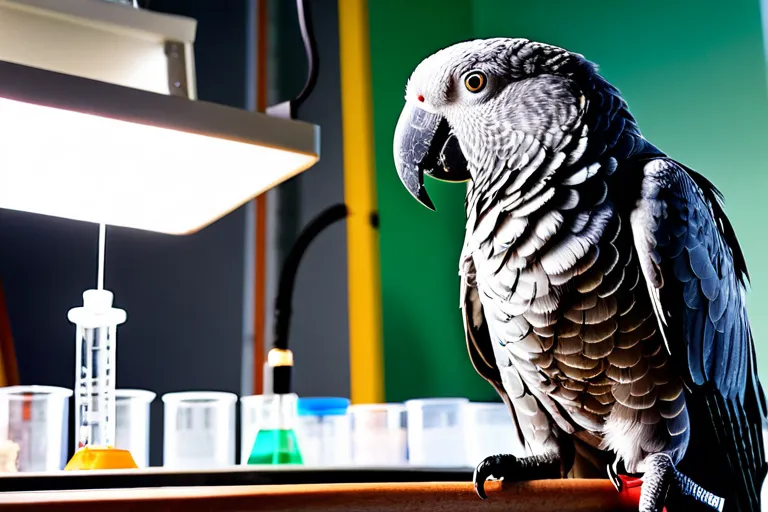
African Grey Parrots demonstrate remarkable problem-solving abilities in controlled laboratory settings
The Cognitive Revolution in Avian Research
For decades, the scientific community largely dismissed birds as creatures of instinct rather than intelligence. However, groundbreaking research from institutions like the Harvard University Animal Cognition Laboratory and the Cornell Lab of Ornithology has fundamentally altered this perception. Dr. Irene Pepperberg's work with Alex, an African Grey parrot, demonstrated that these birds could understand abstract concepts, count, and even express desires through language.
According to a comprehensive review published in the Journal of Comparative Psychology, parrots exhibit several cognitive traits previously thought unique to mammals:
- Theory of mind capabilities
- Advanced problem-solving skills
- Tool use and modification
- Complex social learning
- Emotional intelligence and empathy

Social interactions among parrots demonstrate sophisticated communication and emotional bonds
The Neurobiology of Avian Intelligence
Recent neuroimaging studies conducted at the Massachusetts Institute of Technology have revealed that parrot brains contain specialized structures analogous to mammalian neocortex. The avian pallium, once considered primitive, shows complex laminar organization supporting advanced cognitive functions.
Dr. Sarah Benson-Amram, a leading researcher in animal cognition at the University of Wyoming, explains: "Parrots possess brain-to-body mass ratios comparable to primates. Their neural architecture supports not only learning and memory but also emotional processing and social cognition. This challenges our fundamental understanding of intelligence evolution."
The American Psychological Association has documented several key findings in avian neurobiology:
Key Neurobiological Discoveries
1. Parrot brains contain spindle neurons similar to those found in human and great ape brains, associated with social intelligence and emotional processing.
2. The nidopallium caudolaterale region shows activity patterns during problem-solving tasks that mirror prefrontal cortex function in mammals.
3. Dopamine and serotonin systems in parrot brains demonstrate complexity comparable to mammalian systems, suggesting sophisticated emotional experiences.
Communication Beyond Mimicry
While parrot vocal mimicry is well-known, research from the University of Oxford Department of Zoology reveals these birds engage in intentional communication far beyond simple repetition. Studies of wild parrot flocks in Australia and South America show complex vocalizations with syntax-like structure and contextual meaning.
Dr. Karl Berg's research on green-rumped parrotlets in Venezuela, published in Animal Behaviour, documents:
"Parrot vocalizations show evidence of referential communication, where specific calls refer to specific predators or food sources. More remarkably, they demonstrate vocal learning throughout their lifespan, a trait shared only with humans, dolphins, and a few other species."

Advanced audio analysis reveals complex structure in parrot vocal communications
Emotional Complexity and Social Bonds
The emotional lives of parrots are far more sophisticated than previously understood. Research from the University of California, Davis Animal Behavior and Cognition Group shows that parrots experience emotions including joy, grief, jealousy, and empathy. These emotional capacities form the foundation of their complex social structures in the wild and their bonds with human companions.
Key findings from longitudinal studies include:
| Emotional Trait | Evidence | Research Source |
|---|---|---|
| Empathy | Consolation behaviors toward distressed flock members | Proceedings of the Royal Society B |
| Grief | Behavioral changes and vocalizations after loss of mate | Animal Cognition |
| Jealousy | Attention-seeking behaviors when owners interact with other pets | Journal of Comparative Psychology |
Practical Implications for Parrot Companionship
Understanding parrot intelligence has profound implications for their care in captivity. The American Veterinary Medical Association now recommends enrichment strategies based on cognitive research:
Cognitive Enrichment
Puzzle feeders, foraging opportunities, and problem-solving toys that challenge parrot intelligence and prevent boredom-related behaviors.
Social Requirements
Regular social interaction, either with human companions or compatible parrot friends, to meet their complex social needs.
Communication Training
Structured communication training using positive reinforcement to establish meaningful two-way interaction.
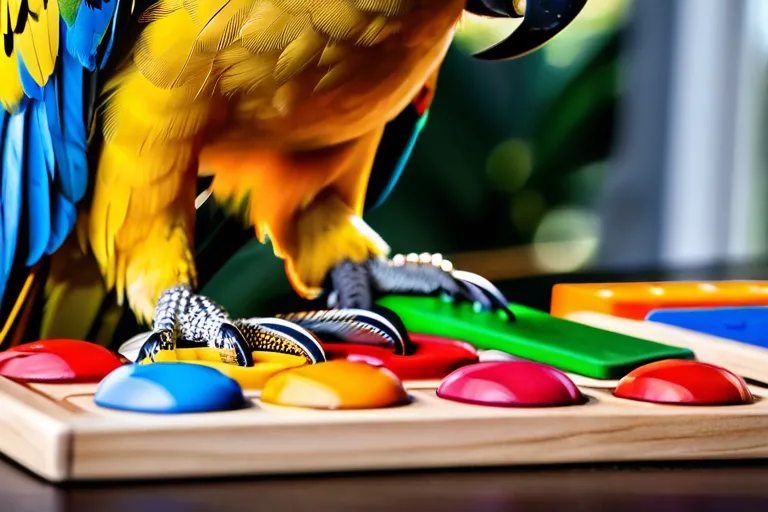
Cognitive enrichment activities designed specifically for parrot intelligence levels
Conservation and Ethical Considerations
The recognition of parrot intelligence raises important ethical questions about their conservation and treatment. The International Union for Conservation of Nature reports that over 28% of parrot species are threatened with extinction, primarily due to habitat loss and illegal trade.
Dr. Stuart Marsden, conservation biologist at Manchester Metropolitan University, emphasizes: "Understanding parrot cognition isn't just academic curiosity. It has direct implications for conservation strategies. Intelligent animals have specific requirements for successful rehabilitation and reintroduction programs."
Current research priorities identified by the American Association for the Advancement of Science include:
- Developing cognitive-based enrichment for captive breeding programs
- Understanding how intelligence affects adaptation to changing environments
- Creating conservation education programs that emphasize parrot sentience
- Establishing ethical guidelines for parrot research and companionship
Future Research Directions
The field of avian cognition continues to evolve rapidly. Upcoming research initiatives at the Max Planck Institute for Ornithology aim to explore:
1. Neuroimaging advances: Using functional MRI to map parrot brain activity during complex tasks
2. Genetic correlates: Identifying genes associated with advanced cognitive abilities in parrots
3. Cross-species comparison: Systematic comparison of cognitive abilities across parrot species
4. Applied cognition: Using understanding of parrot intelligence to improve welfare in captivity
Research Summary
The study of parrot intelligence represents one of the most exciting frontiers in animal cognition research. As we continue to unravel the complexities of avian minds, we not only gain insight into the evolution of intelligence but also develop more ethical and effective approaches to parrot conservation and companionship.
Sources: Harvard University Animal Cognition Laboratory, Cornell Lab of Ornithology, Journal of Comparative Psychology, Massachusetts Institute of Technology, American Psychological Association, University of Oxford, University of California Davis, American Veterinary Medical Association, International Union for Conservation of Nature, Max Planck Institute for Ornithology