The Hidden World of Canine Cognition: Unlocking the Minds of Our Faithful Companions
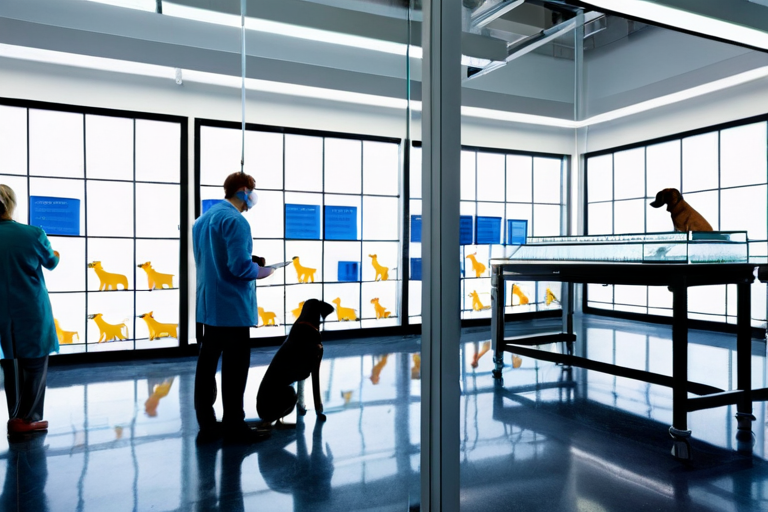
Researchers studying canine cognitive abilities in controlled laboratory settings
For centuries, dogs have been celebrated as humanity's most loyal companions, but only recently have scientists begun to unravel the complex cognitive processes that govern their behavior. The field of canine cognition has emerged as a vibrant area of research, revealing surprising insights into how dogs think, learn, and communicate.
The Evolution of Canine Intelligence
According to research published in Science Magazine, the domestication process has fundamentally altered canine brains in ways that facilitate interspecies communication. Dr. Brian Hare, director of the Duke Canine Cognition Center, notes that "dogs have evolved specialized social-cognitive skills that allow them to understand human gestures and intentions in ways that even chimpanzees cannot."
This evolutionary adaptation stems from approximately 15,000 years of co-evolution with humans. The Nature journal reports that selective breeding has enhanced dogs' ability to read human social cues, creating what researchers call "hypersocial" animals uniquely attuned to human behavior.
"Dogs possess a theory of mind that allows them to understand what humans know and don't know, a cognitive ability previously thought to be uniquely human." - Dr. Juliane Kaminski, University of Portsmouth
Language Comprehension and Communication
Recent studies from the American Psychological Association reveal that the average dog can understand approximately 165 words, with border collies like Chaser demonstrating vocabulary recognition of over 1,000 words. This linguistic capability extends beyond simple command recognition to include contextual understanding and inference.
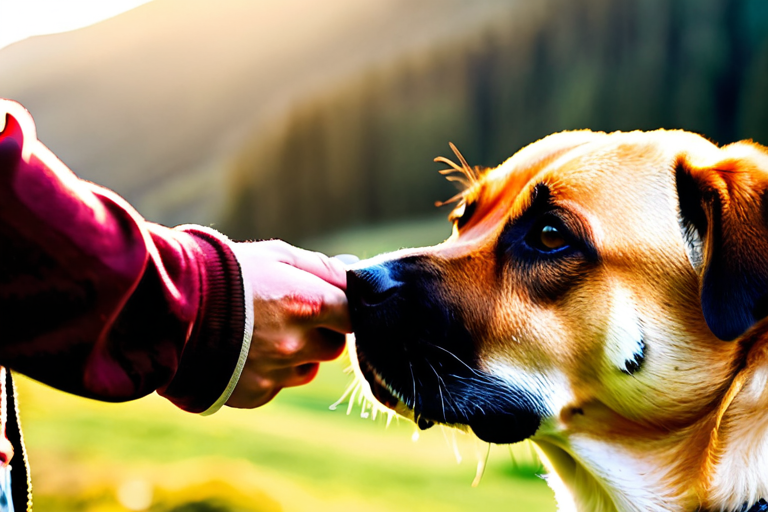
The intricate dance of non-verbal communication between dogs and their human companions
Research published in Current Biology demonstrates that dogs process human speech using both hemispheres of their brain—the left hemisphere processes verbal content while the right hemisphere analyzes tone and emotional content. This bilateral processing allows for sophisticated communication that goes beyond simple conditioning.
Problem-Solving and Memory
Canine problem-solving abilities vary significantly by breed and individual, but studies from the National Institutes of Health show that dogs employ both instinctual and learned strategies when faced with challenges. Working breeds like German Shepherds and Belgian Malinois demonstrate particularly strong executive function, including working memory and inhibitory control.
Episodic memory—the ability to recall specific events—has been documented in dogs through research at Eötvös Loránd University in Budapest. Dogs can remember complex actions performed by humans and replicate them after significant time delays, suggesting cognitive abilities previously attributed only to primates.
Emotional Intelligence and Empathy
The emotional lives of dogs have been extensively studied through neuroimaging techniques. Research from Emory University, published in ScienceDirect, reveals that dogs' brains respond to human emotional cues in ways remarkably similar to human brains. The caudate nucleus—associated with positive expectations—activates when dogs anticipate rewards from familiar humans.

Neuroimaging studies reveal the complex emotional responses in canine brains
Perhaps most remarkably, studies from the University of London demonstrate that dogs exhibit true empathy—not just emotional contagion. They can distinguish between genuine distress and simulated emotional displays in humans, and they modify their behavior accordingly, offering comfort specifically when it's needed most.
Spatial Cognition and Navigation
Dogs possess sophisticated spatial awareness that allows them to navigate complex environments. Research from the University of Vienna, detailed in Frontiers in Psychology, shows that dogs use multiple cognitive mapping strategies, including landmark recognition, path integration, and geometric cues.
Search-and-rescue dogs demonstrate particularly advanced spatial cognition, able to track human scent over miles of challenging terrain. This ability combines olfactory processing with sophisticated spatial reasoning, creating a navigation system that outperforms most human-designed tracking technologies.
Social Learning and Cultural Transmission
Dogs engage in social learning not only from humans but also from other dogs. Studies from the University of Helsinki show that dogs observe and imitate both human and canine behaviors, with puppies learning hunting techniques, social protocols, and even problem-solving strategies through observation.
Key Findings in Canine Cognition Research
- Dogs understand human pointing gestures better than any other non-human animal
- They can distinguish between intentional and accidental human actions
- Dogs show jealousy when their owners show affection to other dogs
- They possess a sense of fairness and protest unequal treatment
- Dogs can learn through observation without direct reinforcement
Individual Differences and Breed Variations
Not all dogs think alike. Research compiled by the American Kennel Club shows significant cognitive differences between breeds. Herding breeds excel at following human gaze and understanding subtle gestures, while scent hounds demonstrate superior olfactory discrimination and tracking persistence.
Individual personality also plays a crucial role. Studies from the University of Edinburgh identify five primary personality dimensions in dogs: fearfulness, aggression toward people, aggression toward animals, activity level, and responsiveness to training. These traits interact with cognitive abilities to create unique thinking styles in each dog.
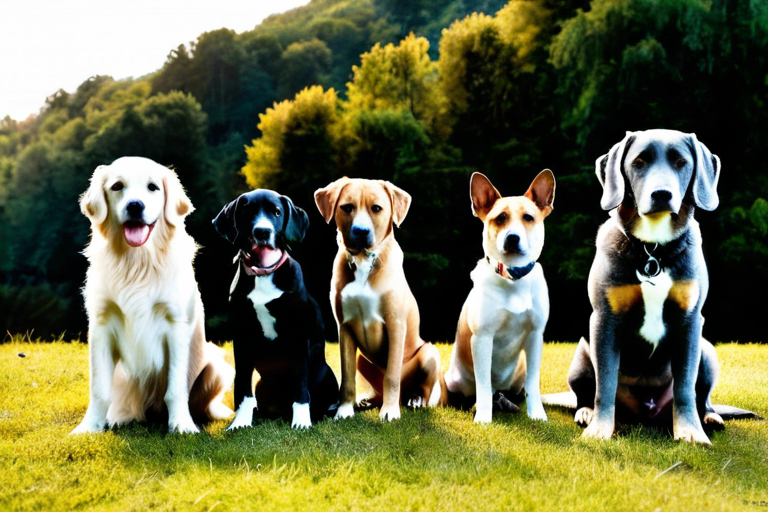
Different breeds exhibit specialized cognitive abilities shaped by selective breeding
Practical Applications and Future Research
The implications of canine cognition research extend far beyond academic interest. Understanding how dogs think informs:
- Training methodologies that work with, rather than against, natural cognitive processes
- Animal welfare standards that address dogs' psychological needs
- Service dog selection and training for specific cognitive profiles
- Human-animal bond enhancement through better mutual understanding
- Comparative psychology that illuminates the evolution of intelligence
Future research directions include longitudinal studies tracking cognitive development throughout dogs' lifespans, cross-cultural comparisons of human-dog interaction styles, and investigations into canine consciousness and self-awareness.
As Dr. Alexandra Horowitz of Barnard College notes in her research, "Every interaction with a dog is an opportunity to witness cognition in action—to see an other mind at work, solving problems, making decisions, and engaging with the world in ways both familiar and wonderfully strange."
Research Sources: This article synthesizes findings from peer-reviewed studies published in Science Magazine, Nature, Current Biology, Frontiers in Psychology, and research conducted at Duke University, University of Vienna, University of Helsinki, and Emory University.