The Silent Conversation: How Pets Interpret Human Non-Verbal Cues
Exploring the subtle ways our animal companions read our body language, facial expressions, and emotional states without a single word being spoken.

The Science Behind Interspecies Understanding
Recent studies from the American Psychological Association reveal that domestic animals, particularly dogs and cats, have evolved specialized cognitive abilities to interpret human non-verbal signals. Research published in the Journal of Comparative Psychology demonstrates that dogs can distinguish between happy and angry human facial expressions with approximately 70% accuracy, even when shown photographs of unfamiliar people.
According to Dr. Alexandra Horowitz, a canine cognition researcher at Barnard College, "Dogs are remarkably attuned to human body language. They notice subtle changes in posture, breathing patterns, and even pupil dilation that most humans would miss." This sensitivity likely developed through thousands of years of co-evolution, where animals that could better understand human intentions had greater survival and reproductive success.
Facial Recognition Across Species
Research from the American Kennel Club's Canine Health Foundation indicates that dogs process human faces differently than they process other visual stimuli. Functional MRI studies show increased activity in the temporal cortex when dogs view human faces compared to when they view objects or other animal faces.
"This neural specialization suggests that reading human expressions has become biologically important for domesticated dogs," explains Dr. Brian Hare, director of the Duke Canine Cognition Center. "They've essentially developed a 'human face reading' module in their brains."
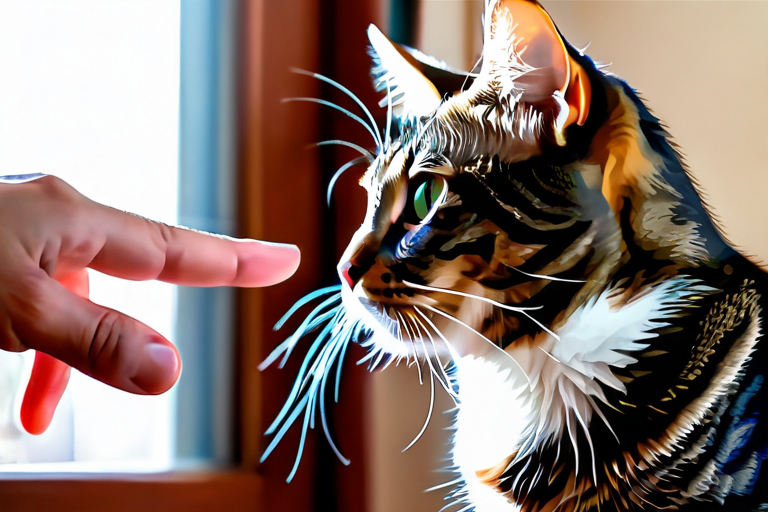
Cats, while less studied in this area, show similar capabilities. A 2020 study in Animal Cognition found that cats can distinguish their owner's voice from a stranger's and respond differently to various emotional tones, even when the actual words are meaningless to them.
Body Language Interpretation
Beyond facial expressions, pets excel at reading human body language. The Humane Society notes several key observations:
- Dogs can predict human movements based on subtle weight shifts and gaze direction
- Cats notice changes in human breathing patterns and respond to tension in muscles
- Both species respond to human posture changes indicating approach or retreat
- Pets often mirror human emotional states through their own body language

Emotional Contagion and Empathy
The phenomenon of emotional contagion—where one individual's emotions trigger similar emotions in another—appears to work across species boundaries. Research from the American Veterinary Medical Association suggests that pets can "catch" human emotions through observation of non-verbal cues.
"When humans are stressed, their pets often show increased cortisol levels," notes Dr. Mia Cobb, an animal welfare researcher. "This isn't just coincidence—it's a physiological response to reading human stress signals."
Studies show that dogs exposed to humans crying will often approach with submissive, comforting behaviors, even if they've never been specifically trained to do so. This suggests an innate capacity for cross-species empathy that goes beyond simple conditioning.
Practical Implications for Pet Owners
Understanding how pets read our non-verbal communication has important practical applications:
- Training Effectiveness: Consistent body language improves training outcomes more than verbal commands alone
- Stress Reduction: Being aware of your own non-verbal stress signals can help prevent transferring anxiety to your pet
- Bond Strengthening: Intentional use of positive body language can deepen the human-animal bond
- Health Monitoring: Changes in how your pet responds to your non-verbal cues can indicate health issues

Evolutionary Perspectives
From an evolutionary standpoint, this cross-species communication ability represents a remarkable adaptation. According to research compiled by the National Geographic Society, the domestication process selected for animals that could effectively read human intentions.
"Animals that could understand when humans were about to feed them, protect them, or pose a threat had clear survival advantages," explains evolutionary biologist Dr. James Serpell. "This created selective pressure for better human signal reading abilities over generations."
This evolutionary history helps explain why even modern pets, removed from working roles, retain these sophisticated human-reading capabilities. They're essentially carrying ancient survival skills into contemporary living rooms.
Future Research Directions
The field of interspecies non-verbal communication continues to evolve. Current research initiatives focus on:
Neuroimaging Studies: Using advanced imaging to map how pet brains process human non-verbal signals
Cross-Species Comparisons: Examining differences between how various pet species interpret human cues
Developmental Research: Studying how these abilities develop in young animals
Applied Applications: Using this knowledge to improve animal-assisted therapy outcomes

Conclusion
The silent conversation between humans and their pets represents one of the most fascinating aspects of interspecies relationships. Through thousands of years of co-evolution, our animal companions have developed sophisticated abilities to read our non-verbal cues, often understanding our emotional states better than we understand them ourselves.
As research continues to uncover the mechanisms behind this cross-species communication, we gain not only scientific knowledge but also practical insights that can strengthen our bonds with our animal companions. The next time your pet seems to "just know" how you're feeling, remember—they're reading a language older than words, written in the subtle movements of your body and face.
References and Further Reading:
• American Psychological Association: Research on animal cognition and human-animal interaction
• American Kennel Club Canine Health Foundation: Studies on dog perception and cognition
• Humane Society: Resources on understanding animal behavior
• American Veterinary Medical Association: Research on animal stress and empathy
• National Geographic Society: Evolutionary perspectives on domestication