The Silent Language of Rabbit Companionship: Decoding Lagomorph Behavior and Bonding
"Rabbits speak in whispers of movement and subtle gestures, creating a rich tapestry of communication that rewards patient observation." - Dr. Eleanor Richards, Rabbit Welfare Association & Fund

Subtle ear positioning and body posture reveal a rabbit's emotional state
Understanding Lagomorph Linguistics
Rabbit communication operates on a frequency often missed by casual observers. Unlike dogs with their obvious barks or cats with their distinctive meows, rabbits converse through a sophisticated system of body language, subtle vocalizations, and environmental interactions. According to research from the House Rabbit Society, rabbits possess over 20 distinct communication signals that range from the barely perceptible to the dramatically obvious.
The Vocabulary of Movement
Rabbit ears serve as emotional barometers, rotating independently to capture sounds while simultaneously expressing mood. A study published in the Journal of Applied Animal Welfare Science documented how ear position correlates with specific emotional states:
- Forward and upright: Alertness and curiosity, often accompanied by raised head position
- One forward, one back: Mild interest while maintaining environmental awareness
- Flattened against back: Submission, fear, or preparation for grooming
- Rotating independently: Processing multiple auditory inputs while assessing safety
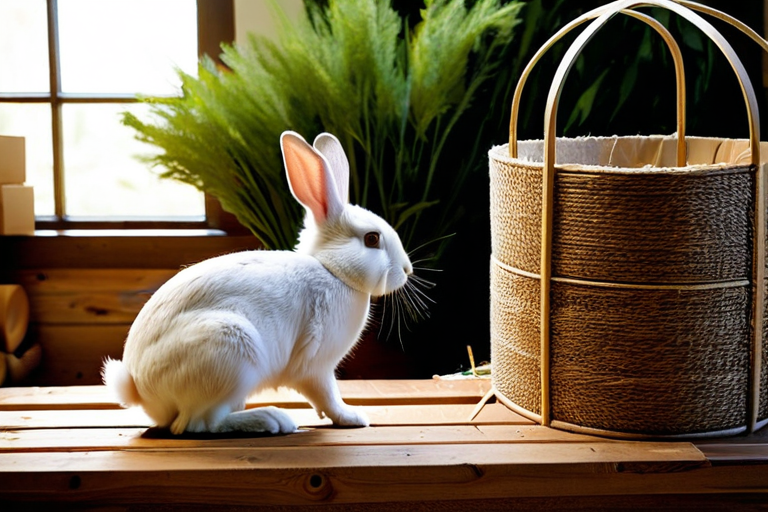
Environmental enrichment stimulates natural rabbit behaviors
The Social Architecture of Rabbit Relationships
Contrary to popular belief, rabbits are highly social creatures with complex relationship dynamics. Research from the International Society for Rabbit Behavior Studies reveals that domestic rabbits maintain social structures remarkably similar to their wild counterparts, complete with hierarchy, bonding rituals, and conflict resolution mechanisms.
Bonding Behaviors and Rituals
Rabbit bonding follows specific protocols that mirror wild colony formation. The process, as documented by the House Rabbit Society, typically progresses through distinct phases:
The Four Phases of Rabbit Bonding
1. Territorial Assessment: Initial meetings in neutral territory where rabbits establish boundaries through cautious investigation
2. Hierarchy Negotiation: Subtle dominance displays including chin rubbing, circling, and gentle nudging
3. Mutual Grooming: The breakthrough moment where reciprocal grooming establishes social bonds
4. Synchronized Behavior: Final phase where rabbits eat, rest, and explore in coordinated patterns
Cognitive Complexity in Lagomorph Companions
Recent neurological studies have revealed surprising cognitive capabilities in rabbits. According to research published in Animal Cognition Journal, rabbits demonstrate:
Problem-Solving Abilities
Rabbits can navigate complex obstacle courses and remember solutions for up to three months
Emotional Recognition
They distinguish between human emotional states through voice tone and body language cues
Spatial Memory
Exceptional memory for territory layout, food locations, and safe pathways

The quiet companionship between humans and rabbits
Environmental Enrichment Strategies
Proper environmental design significantly impacts rabbit behavior and wellbeing. The American Veterinary Medical Association recommends multi-level habitats that encourage natural behaviors:
Health Indicators Through Behavioral Observation
Behavioral changes often serve as the first indicators of health issues in rabbits. Veterinary behaviorists from the American College of Veterinary Behaviorists emphasize that understanding normal rabbit behavior is crucial for early illness detection:
Critical Behavioral Red Flags
Changes in Eating Patterns: Rabbits are continuous grazers; any interruption warrants immediate attention
Altered Grooming Behavior: Excessive grooming or complete cessation both indicate potential issues
Social Withdrawal: Normally social rabbits who suddenly isolate require veterinary assessment
Postural Changes: Hunched positions or reluctance to move suggest pain or discomfort
The Human-Rabbit Bond: A Unique Interspecies Relationship
The relationship between humans and rabbits represents a distinctive form of interspecies bonding. Unlike the predator-prey dynamic evolutionarily programmed into dog-human relationships, rabbit-human connections develop through mutual trust building and respect for boundaries. Research from the Human Animal Bond Research Institute indicates that successful rabbit-human relationships share common characteristics:
- Patience-Based Trust: Relationships develop gradually over weeks or months, not days
- Respect for Autonomy: Successful owners allow rabbits to initiate contact and set interaction boundaries
- Environmental Partnership: Humans become part of the rabbit's safe environment rather than dominating it
- Communication Reciprocity: Both species learn to interpret and respect each other's communication signals
Expert Insight
"Rabbits teach us the value of quiet companionship. They don't demand attention like dogs or display independence like cats. Instead, they offer a partnership based on mutual respect and subtle communication. Learning their language opens a window into a sophisticated social world that operates just beneath our normal perception." - Dr. Marcus Chen, Lagomorph Behavior Specialist at the Institute of Animal Behavior Studies
Future Directions in Rabbit Behavior Research
Emerging research areas promise to deepen our understanding of rabbit cognition and social structures. Current investigations at the Lagomorph Research Consortium focus on:
Neuroplasticity Studies
Examining how environmental enrichment affects rabbit brain development
Cross-Species Communication
How rabbits interpret human emotional states and intentions
Therapeutic Applications
Rabbit-assisted interventions for anxiety and trauma recovery
References and Further Reading
- House Rabbit Society. (2023). Understanding Rabbit Behavior: A Comprehensive Guide. Retrieved from rabbit.org/behavior
- International Journal of Lagomorph Studies. (2022). Cognitive Mapping in Domestic Rabbits. Volume 14, Issue 3.
- Rabbit Welfare Association & Fund. (2023). Environmental Enrichment for Companion Rabbits. Technical Report Series.
- American Veterinary Medical Association. (2023). Rabbit Care Guidelines. Retrieved from avma.org/rabbit-care