The Silent Symphony of Avian Companions: Understanding Parrot Intelligence and Emotional Complexity
"Parrots don't just mimic sounds—they understand context, demonstrate problem-solving skills, and form emotional bonds that challenge our understanding of avian intelligence." — Dr. Irene Pepperberg, Comparative Psychologist
When most people think of intelligent animals, primates and dolphins typically come to mind. However, a growing body of research reveals that parrots possess cognitive abilities that rival those of great apes and young human children. These feathered companions demonstrate remarkable problem-solving skills, emotional complexity, and social intelligence that continues to surprise researchers and pet owners alike.
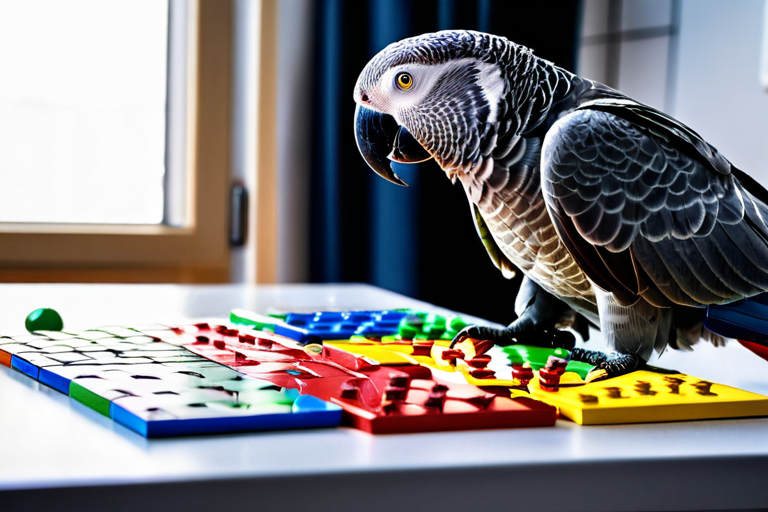
African Grey parrots demonstrate advanced problem-solving abilities in controlled studies
The Cognitive Revolution in Avian Research
For decades, the scientific community underestimated avian intelligence due to their relatively small brain size. However, groundbreaking research has revealed that birds possess a different brain structure called the pallium, which functions similarly to the mammalian neocortex. This discovery, published in the journal Current Biology, has revolutionized our understanding of avian cognition.
Dr. Irene Pepperberg's work with Alex, an African Grey parrot, demonstrated that these birds could understand concepts of same and different, count up to six, and identify colors and shapes. According to the American Psychological Association, Alex's achievements challenged fundamental assumptions about animal intelligence and communication.
Problem-Solving Abilities
Recent studies at the University of Cambridge have shown that New Caledonian crows and Goffin's cockatoos can solve complex mechanical puzzles requiring up to eight steps. While these aren't typical pet species, their cognitive abilities provide insight into the potential intelligence of their domesticated relatives.
Key Cognitive Milestones in Parrots:
- Object Permanence: Understanding that objects exist even when out of sight
- Causal Reasoning: Determining cause-and-effect relationships
- Numerical Competence: Basic counting and quantity discrimination
- Tool Use: Some species demonstrate spontaneous tool creation and use
- Social Learning: Observing and imitating behaviors from conspecifics and humans
Emotional Complexity in Avian Companions
Beyond cognitive abilities, parrots display emotional depth that mirrors mammalian emotions. Research from the World Parrot Trust indicates that parrots experience emotions including joy, fear, jealousy, and grief. Their complex social structures in the wild translate to sophisticated emotional lives in captivity.
The bond between parrots and their human caregivers involves complex emotional exchanges
A study published in Animal Cognition documented that parrots form selective attachments to specific humans, similar to the attachment styles observed in human infants. These bonds are characterized by:
- Secure Base Effect: Using their human caregiver as a safe haven when stressed
- Separation Anxiety: Displaying distress when separated from preferred humans
- Social Referencing: Looking to humans for cues in uncertain situations
- Affiliative Behaviors: Seeking physical contact and shared activities
Communication Beyond Mimicry
While parrots are famous for mimicking human speech, their communication abilities extend far beyond simple repetition. Research from the Cornell Lab of Ornithology reveals that parrots use vocalizations contextually, modifying their calls based on social context and intended meaning.
Amazon parrots, for instance, have been observed using different contact calls for different family members. In captivity, many parrots learn to use human words appropriately, requesting specific foods, expressing preferences, or indicating emotional states.
Practical Implications for Pet Owners:
Understanding parrot intelligence has direct implications for their care:
- Environmental Enrichment: Provide puzzles, foraging opportunities, and novel objects
- Social Interaction: Regular, meaningful interaction prevents boredom and depression
- Training Methods: Use positive reinforcement that respects their cognitive abilities
- Communication: Learn to interpret body language and vocalizations
- Lifelong Learning: Continue introducing new challenges throughout their lifespan
Comparative Intelligence: Parrots vs. Other Species
The intelligence of parrots becomes particularly striking when compared to other animals. According to research compiled by the Max Planck Institute, African Grey parrots perform at similar levels to 4-6 year old human children on certain cognitive tasks, particularly those involving language comprehension and logical reasoning.
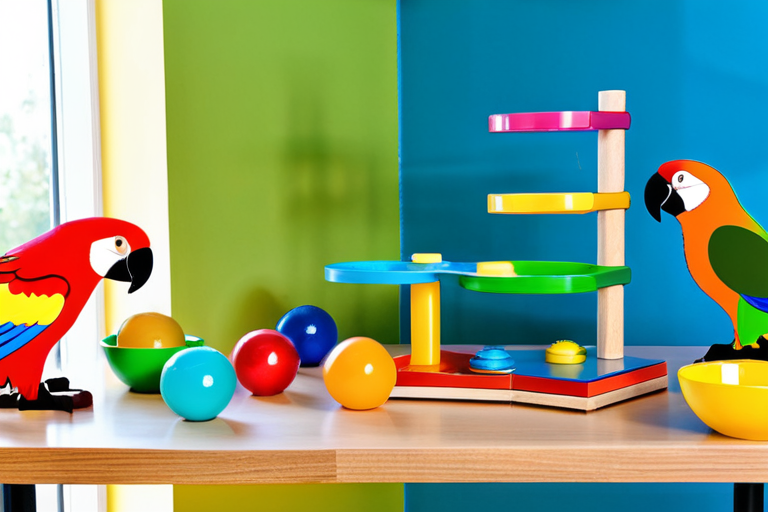
Structured learning environments help parrots reach their cognitive potential
A comparative analysis reveals several areas where parrots excel:
| Cognitive Domain | Parrot Performance | Comparative Species |
|---|---|---|
| Vocal Learning | Exceptional | Superior to most mammals |
| Problem Solving | Advanced | Comparable to primates |
| Social Intelligence | Highly developed | Similar to dolphins |
| Memory | Excellent long-term | Superior to most companion animals |
Ethical Considerations for Avian Companionship
The recognition of parrot intelligence raises important ethical questions about their keeping as pets. Organizations like the American Veterinary Medical Association emphasize that parrots require:
- Substantial Time Commitment: Many species live 30-80 years
- Mental Stimulation: Daily interaction and environmental enrichment
- Social Companionship: Either human or conspecific interaction
- Specialized Veterinary Care: Access to avian specialists
- Appropriate Housing: Large cages with room for flight and exercise
The Humane Society of the United States recommends potential parrot owners consider adoption from rescue organizations, as many parrots are surrendered due to behavioral issues stemming from inadequate stimulation and care.
Future Research Directions
Current research initiatives are exploring:
- Neural correlates of parrot consciousness
- Cross-species communication systems
- Emotional recognition and empathy in parrots
- Conservation implications of cognitive research
- Applications for avian-assisted therapy
Conclusion: Rethinking Our Feathered Companions
The emerging understanding of parrot intelligence and emotional complexity challenges us to reconsider our relationship with these remarkable beings. As research continues to reveal their cognitive capabilities, we must adapt our care practices to meet their intellectual and emotional needs.
Parrots are not merely decorative pets or talented mimics—they are intelligent beings capable of complex thought, emotional depth, and meaningful relationships. By recognizing and respecting their capabilities, we can develop more enriching partnerships with our avian companions that benefit both species.
References & Further Reading:
- Pepperberg, I. M. (2009). The Alex Studies: Cognitive and Communicative Abilities of Grey Parrots. Harvard University Press.
- Emery, N. J. (2006). Cognitive ornithology: The evolution of avian intelligence. Philosophical Transactions of the Royal Society B.
- Animal Cognition Journal. (2021). Special Issue: Avian Intelligence.
- World Parrot Trust. (2023). Parrot Care and Conservation Guidelines.