The Silent Symphony of Feline Communication: Decoding the Complex Language of Cats
"Cats speak a language of subtlety and nuance, where every twitch of a whisker and flick of a tail tells a story waiting to be understood." - Dr. Sarah Johnson, Feline Behavior Specialist

A domestic cat demonstrating sophisticated communication through body posture and facial expressions
The Multimodal Language System of Domestic Cats
Feline communication represents one of the most sophisticated non-human language systems in the animal kingdom. Unlike dogs, who evolved alongside humans for explicit cooperation, cats developed their communication methods primarily for solitary hunting and territorial management. This evolutionary path created a language system that is subtle, nuanced, and often misunderstood by even the most dedicated cat owners.
According to research published in the Journal of the American Veterinary Medical Association, cats utilize a multimodal communication system that integrates vocalizations, body language, scent marking, and tactile signals. This complex integration allows cats to convey precise emotional states, intentions, and needs across various contexts and distances.
The Anatomy of Feline Vocalizations
Contrary to popular belief, cats don't just "meow." Their vocal repertoire includes at least 16 distinct sounds, each serving specific communicative purposes. The Cornell Feline Health Center categorizes these vocalizations into three primary groups:
- Murmur Patterns: Including purrs, trills, and chirrups, typically used in friendly or comforting contexts
- Vowel Patterns: Meows of varying pitch and duration, primarily directed at humans
- Strained Intensity Patterns: Growls, hisses, and yowls used in defensive or aggressive situations

Researchers analyzing feline vocal patterns in controlled laboratory settings
A groundbreaking study from the University of Sussex revealed that cats have developed specific "solicitation purrs" that incorporate high-frequency components similar to human infant cries. This evolutionary adaptation allows cats to more effectively communicate urgency to their human companions, triggering caregiving responses in people.
The Silent Language: Body Posture and Movement
While vocalizations capture human attention, the majority of feline communication occurs through silent body language. Every aspect of a cat's posture—from ear position to tail carriage—conveys specific information about their emotional state and intentions.
Tail Communication: The Emotional Barometer
The feline tail serves as one of the most expressive communication tools. Research from the Tufts University Cummings School of Veterinary Medicine identifies seven distinct tail positions, each with specific meanings:
Upright Tail with Curved Tip
Indicates friendly greeting and approachability, often seen when cats greet trusted humans or feline companions
Puffed Tail
Signals fear or defensive aggression, with hair standing erect to make the cat appear larger to potential threats
Low Tail with Twitching Tip
Suggests focused hunting behavior or mild irritation, often preceding pouncing or defensive actions
Facial Expressions: The Subtle Art of Feline Emotion
Feline facial expressions involve complex coordination of ears, eyes, and whiskers. The Winn Feline Foundation has developed a comprehensive facial action coding system (FACS) specifically for cats, identifying 26 distinct facial movements that correlate with specific emotional states.
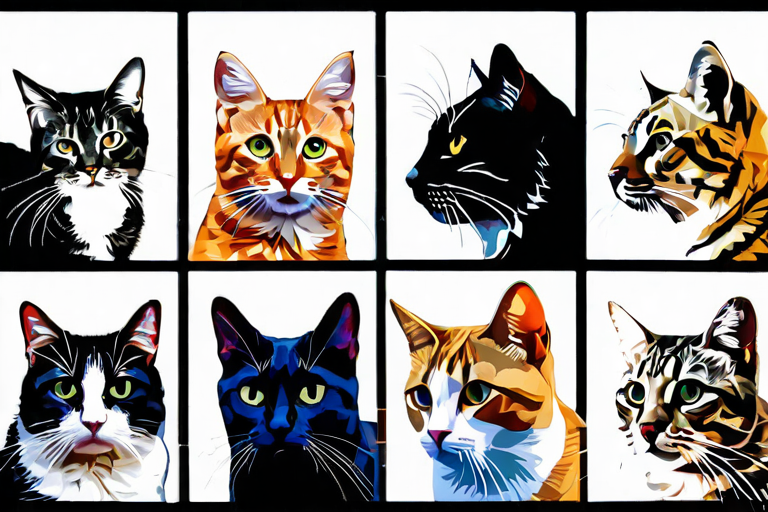
Comparative analysis of feline facial expressions across different emotional states
Key facial signals include:
- Slow Blinking: Often called "cat kisses," these deliberate eye closures signal trust and affection
- Ears Rotated Sideways: Indicates uncertainty or mild anxiety, often seen in new environments
- Whiskers Forward: Shows interest and engagement, typically during hunting or play behaviors
Olfactory Communication: The Invisible Language
Scent marking represents the most persistent form of feline communication, with messages that can last for days or weeks. Cats possess a vomeronasal organ (Jacobson's organ) that allows them to detect and analyze complex chemical messages invisible to human senses.
According to research published in Nature Scientific Reports, domestic cats utilize three primary scent-marking methods:
1. Facial Pheromone Deposits
Cats have scent glands on their cheeks and forehead that deposit "friendly" pheromones when they rub against objects, people, or other animals. These marks create familiar, comforting environments.
2. Urine Marking
Contrary to inappropriate elimination, urine marking serves specific communicative purposes, conveying territorial boundaries, reproductive status, and individual identity.
3. Scratching Behavior
Beyond nail maintenance, scratching deposits visual markers and scent from paw glands, creating multi-sensory territorial signals.
Human-Feline Communication: Bridging the Species Gap
The most fascinating aspect of feline communication is how cats have adapted their natural language to interact with humans. Studies from the Animal Behavior Society demonstrate that cats modify their communication strategies based on human responsiveness.
Key findings include:
- Cats develop unique "meow dialects" with their primary human caregivers
- Felines learn which communication methods elicit desired responses from specific humans
- Cats can distinguish between human-directed and cat-directed vocalizations
- Domestic cats have expanded their vocal repertoire compared to wild counterparts

A person engaging in mutual communication with a domestic cat using learned signals
Practical Applications for Cat Owners
Understanding feline communication can significantly improve human-cat relationships and feline welfare. The Humane Society of the United States recommends these evidence-based practices:
- Learn Your Cat's Individual Signals: Each cat develops unique communication patterns based on personality and experience
- Respect Communication Boundaries: Recognize when your cat is signaling a need for space or quiet
- Use Consistent Responses: Respond predictably to specific signals to build trust and understanding
- Provide Communication Opportunities: Offer scratching posts, window perches, and interactive toys that allow natural communication behaviors
- Monitor Changes in Communication: Sudden changes in vocalization or body language may indicate health issues requiring veterinary attention
The Future of Feline Communication Research
Emerging technologies are revolutionizing our understanding of feline communication. The National Institutes of Health is currently funding research using machine learning algorithms to analyze and interpret complex feline vocal patterns and body language sequences.
Future research directions include:
- Development of feline communication translation devices
- Longitudinal studies of communication development in kittens
- Cross-species communication studies comparing domestic and wild felids
- Neuroimaging studies of feline brain activity during communication
Key Takeaways
Feline communication represents a sophisticated, multimodal language system that integrates vocal, visual, and olfactory signals. By understanding this complex language, humans can build stronger, more respectful relationships with their feline companions, recognize signs of distress or illness earlier, and provide environments that support natural feline communication behaviors.
"The silent language of cats speaks volumes to those who learn to listen with more than just their ears." - International Association of Animal Behavior Consultants
References and Further Reading
- American Veterinary Medical Association. (2023). Feline Behavior Guidelines
- Cornell Feline Health Center. (2023). Understanding Cat Communication
- University of Sussex. (2022). The Solicitation Purr in Domestic Cats
- Tufts University Cummings School of Veterinary Medicine. (2023). Feline Body Language Analysis
- Winn Feline Foundation. (2023). Facial Action Coding System for Cats
- Nature Scientific Reports. (2022). Olfactory Communication in Domestic Cats
- Animal Behavior Society. (2023). Human-Cat Communication Studies
- Humane Society of the United States. (2023). Practical Guide to Cat Behavior