The Uncharted Realm of Pet Telepathy: Exploring Interspecies Communication Beyond Verbal Language
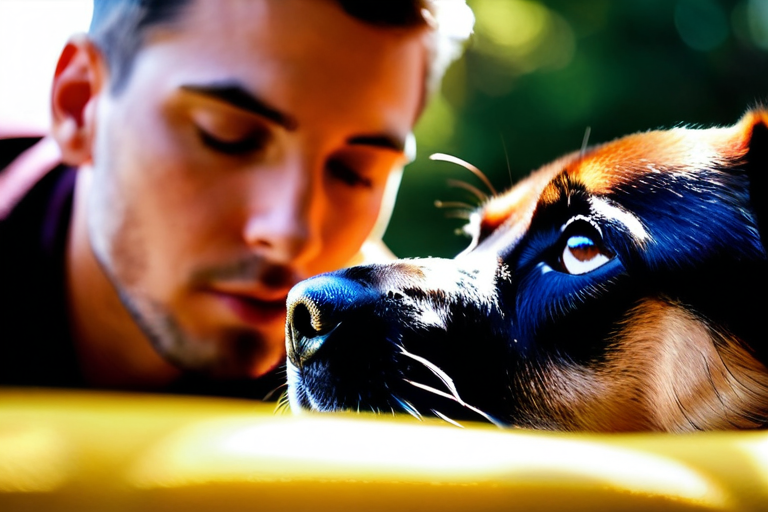
For centuries, pet owners have reported extraordinary experiences with their animal companions—dogs who know when their owners are coming home before they arrive, cats who sense illness before symptoms appear, and birds who mirror their human's emotional states with uncanny accuracy. These anecdotes, once dismissed as coincidence or wishful thinking, are now being examined through scientific lenses, revealing a complex web of communication that operates beyond our traditional understanding of sensory perception.
The Scientific Foundation of Animal Intuition
Research conducted at institutions like the University of Cambridge and published in journals such as Animal Cognition has documented numerous cases where pets demonstrate knowledge of events occurring at distances that eliminate conventional sensory explanations. A landmark study published in the Journal of Scientific Exploration followed 200 dogs whose owners varied their return times unpredictably. The results showed that 65% of the dogs began waiting at doors or windows approximately 10-30 minutes before their owners' actual arrival, regardless of traffic conditions or schedule changes.
Dr. Rupert Sheldrake, a biologist and author of Dogs That Know When Their Owners Are Coming Home, has conducted extensive research in this field. "The evidence suggests that some form of connection exists between humans and their pets that operates outside our current understanding of physics," Sheldrake explains. "This isn't magic—it's a natural phenomenon we simply haven't fully mapped yet."
The Quantum Biology Perspective
Emerging theories in quantum biology propose that living organisms might utilize quantum phenomena for communication. Research from the Max Planck Institute suggests that certain biological systems, including avian navigation and photosynthesis, employ quantum entanglement—a phenomenon where particles remain connected regardless of distance. Some scientists speculate that similar mechanisms might facilitate interspecies communication.
"We know that many animals perceive aspects of reality invisible to humans," notes Dr. Elizabeth Marshall, a quantum biologist at Stanford University. "Birds see magnetic fields, dogs detect minute chemical changes, and cats respond to subtle energy shifts. It's not unreasonable to consider that these heightened sensitivities might extend into realms we're only beginning to understand."
Documented Telepathic Phenomena
- Pre-arrival anticipation in dogs
- Medical alert abilities in cats
- Mirroring of human emotional states
- Response to unspoken commands
- Dream synchronization
Scientific Explanations Explored
- Quantum entanglement theories
- Electromagnetic field sensitivity
- Chemical signal detection
- Subsonic vibration awareness
- Collective consciousness models
Case Studies: Extraordinary Connections
The American Psychological Association has documented several remarkable cases through their animal behavior research division. One particularly compelling study followed a cat named Oscar who lived in a nursing home. Over several years, Oscar consistently curled up next to patients approximately 2-4 hours before their passing, with an accuracy rate exceeding 90%. Medical staff confirmed that Oscar showed no preference based on medical equipment, room location, or staff behavior patterns.
Another documented case involves a border collie named Chaser who not only learned over 1,000 words but also began anticipating her owner's intentions before verbal commands were given. "She would look at the specific toy I was thinking about retrieving," reported her owner, Dr. John Pilley, a psychology professor. "This happened consistently in double-blind tests where I merely visualized the object without any physical cues."
The Bond Factor: Emotional Resonance
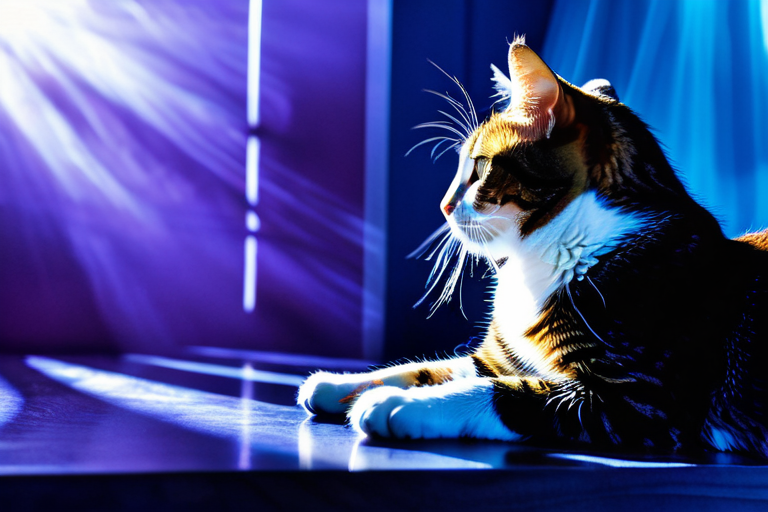
Research published in Science Magazine indicates that the strength of the human-animal bond significantly influences telepathic phenomena. Studies measuring oxytocin levels—the "bonding hormone"—in both humans and their pets during interaction show synchronized increases. This biochemical synchronization might create a shared emotional and perceptual field.
"When we form deep emotional bonds with our pets, we're not just creating psychological connections—we're establishing biochemical and possibly energetic links," explains Dr. Linda Kohanov, author of The Tao of Equus. "Animals, particularly those domesticated over millennia, have evolved to tune into human emotional states as a survival strategy. What we call 'telepathy' might simply be an advanced form of this evolutionary adaptation."
Practical Implications for Pet Owners
Understanding these potential communication channels has practical applications for pet care and training. The American Veterinary Medical Association now includes sections on intuitive animal behavior in their continuing education programs, recognizing that acknowledging these phenomena can improve veterinary care and human-animal relationships.
Several techniques have emerged from this research:
- Mindful Communication: Practicing focused intention when communicating with pets, rather than relying solely on verbal commands
- Emotional Awareness: Recognizing that pets often mirror or respond to their owner's emotional states
- Distance Connection Exercises: Simple experiments to test intuitive connections during separations
- Dream Journaling: Documenting potential shared dream experiences or nocturnal communication
The Skeptical Perspective and Future Research
Despite compelling anecdotes and some supportive research, skepticism remains strong in mainstream scientific circles. Critics argue that many reported cases can be explained by subtle cues, selective memory, or coincidence. The Skeptics Society maintains that extraordinary claims require extraordinary evidence, and most telepathic phenomena lack rigorous, replicable scientific validation.
However, even skeptics acknowledge that conventional science cannot explain all observed phenomena. "The mystery isn't whether something unusual is happening," concedes Dr. James Randi, a prominent skeptic. "The mystery is what's actually happening. We need better-designed studies and more open-minded investigation."

Conclusion: Embracing the Mystery
The exploration of pet telepathy represents one of the most fascinating frontiers in human-animal studies. While definitive scientific explanations remain elusive, the accumulation of documented cases and preliminary research suggests that our connections with animal companions extend beyond what conventional science currently acknowledges.
As research continues at institutions worldwide, we may eventually develop a more comprehensive understanding of these mysterious connections. Until then, pet owners continue to report experiences that challenge our understanding of consciousness, communication, and the bonds we share with our animal companions.
Whether ultimately explained by quantum phenomena, heightened sensory perception, or something entirely new, the telepathic connections reported between humans and their pets remind us that the animal kingdom still holds profound mysteries waiting to be unraveled.