The Uncharted Territory of Avian Cognition Decoding the Complex Minds of Parrots and Corvids
For centuries, birds were largely dismissed as creatures of instinct, their behaviors attributed to simple stimulus-response mechanisms rather than genuine intelligence. This perception began shifting dramatically in the late 20th century, and today, research reveals that certain avian species—particularly parrots and corvids—possess cognitive abilities rivaling those of primates and young human children.
The Avian Brain Revolution
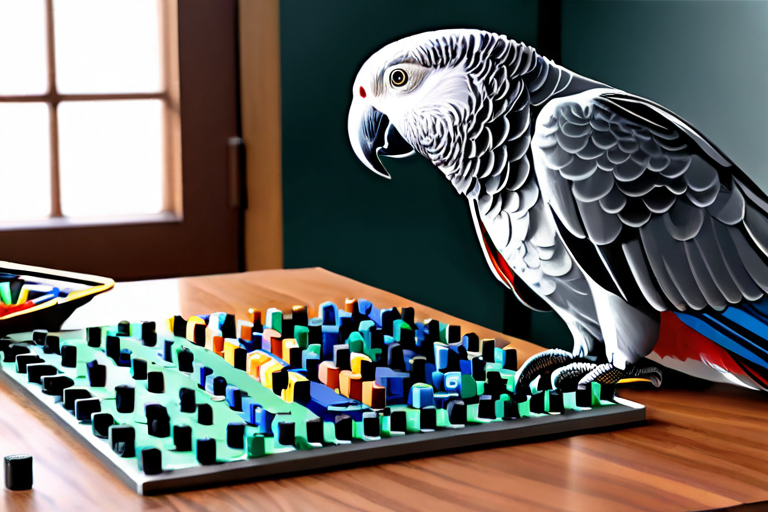
The traditional view of bird brains as primitive structures changed when neuroscientists discovered the avian pallium—a brain region functionally analogous to the mammalian neocortex. Research published in Science reveals that despite structural differences, avian brains achieve similar computational power through different neural architectures.
Key Finding: The avian brain contains approximately twice as many neurons per unit volume compared to mammalian brains, with particularly high densities in forebrain areas associated with higher cognitive functions.
Neural Architecture and Cognitive Capacity
According to studies from the Cornell Lab of Ornithology, corvids and parrots possess brain-to-body mass ratios comparable to great apes. Their pallial regions show complex laminar organization previously thought unique to mammals, enabling advanced cognitive processing.
Parrot Intelligence Beyond Mimicry
While parrot vocal mimicry has long fascinated humans, recent research reveals this represents merely the surface of their cognitive abilities. The Harvard Animal Cognition Laboratory has documented African Grey parrots demonstrating:
- Numerical Competence: Understanding of ordinality and cardinality up to eight items
- Conceptual Understanding: Categorization of objects by color, shape, and material
- Logical Reasoning: Solving multi-step problems requiring inference
- Social Intelligence: Recognizing individual humans and understanding social dynamics

The Alex Parrot Legacy
The groundbreaking work with Alex, an African Grey parrot studied by Dr. Irene Pepperberg, revolutionized understanding of avian cognition. Over 30 years of research demonstrated Alex could:
| Cognitive Ability | Demonstrated Skill | Comparative Level |
|---|---|---|
| Object Permanence | Understanding hidden objects continue to exist | Equivalent to 2-year-old human |
| Numerical Concepts | Counting to six, understanding zero concept | Superior to non-human primates |
| Linguistic Reference | Using labels meaningfully, not just mimicking | Unique among non-human animals |
Corvid Problem-Solving Prowess
Research from the University of Cambridge reveals that corvids—including crows, ravens, and jays—exhibit cognitive abilities once believed exclusive to primates:
Notable Discovery: New Caledonian crows not only use tools but manufacture them, modifying materials to create hook-shaped implements for extracting insects—a behavior demonstrating planning and foresight.
Tool Use and Manufacture
Studies published in Current Biology document crows:
- Creating compound tools from multiple components
- Selecting appropriate tools for specific tasks
- Storing tools for future use
- Teaching tool-making skills to offspring
Social Intelligence and Communication
Avian social structures reveal complex cognitive underpinnings. Research from the Max Planck Institute demonstrates:
Theory of Mind in Birds
Experiments with scrub jays show they engage in "tactical deception," hiding food differently depending on whether they're being observed—behavior requiring understanding that others have different knowledge states.
Complex Vocal Communication
Beyond mimicry, parrots and corvids exhibit:
- Context-appropriate vocalizations
- Regional dialects in wild populations
- Referential communication about specific objects or events
- Vocal learning throughout life
Memory and Future Planning
Research from Lund University reveals remarkable episodic-like memory in corvids. Clark's nutcrackers can remember thousands of cache locations months after hiding food, demonstrating:
| Memory Type | Avian Demonstration | Significance |
|---|---|---|
| Episodic Memory | Recalling specific caching events | Previously thought unique to humans |
| Future Planning | Caching food for anticipated needs | Requires mental time travel |
| Spatial Memory | Navigating complex environments | Superior to most mammals |

Implications for Understanding Animal Consciousness
The cognitive abilities demonstrated by parrots and corvids challenge traditional hierarchies of intelligence. Research compiled by the Animal Cognition Society suggests these birds possess:
Consciousness Indicators: Self-awareness, emotional complexity, empathy responses, and apparent subjective experiences documented in controlled experiments.
Ethical Considerations
As understanding of avian cognition deepens, ethical questions emerge regarding:
- Captive bird welfare standards
- Conservation priorities for intelligent species
- Legal recognition of avian sentience
- Research ethics in animal cognition studies
Future Research Directions
Current studies at institutions like the MIT Comparative Cognition Laboratory focus on:
- Neural correlates of avian decision-making
- Cross-species communication possibilities
- Evolutionary pressures driving avian intelligence
- Applications for artificial intelligence development
The exploration of avian cognition represents one of the most exciting frontiers in comparative psychology, continually reshaping our understanding of intelligence, consciousness, and the cognitive capacities distributed across the animal kingdom.