The Uncharted Territory of Avian Cognition: Decoding the Complex Minds of Parrots and Corvids
"The avian brain, once considered primitive, has revealed cognitive capacities rivaling those of primates and cetaceans." - Dr. Irene Pepperberg, Comparative Psychologist
For centuries, birds were dismissed as simple creatures governed by instinct rather than intelligence. However, groundbreaking research over the past three decades has fundamentally reshaped our understanding of avian cognition. Parrots and corvids (the family including crows, ravens, and jays) have demonstrated problem-solving abilities, complex communication systems, and social intelligence that challenge traditional hierarchies of animal cognition.
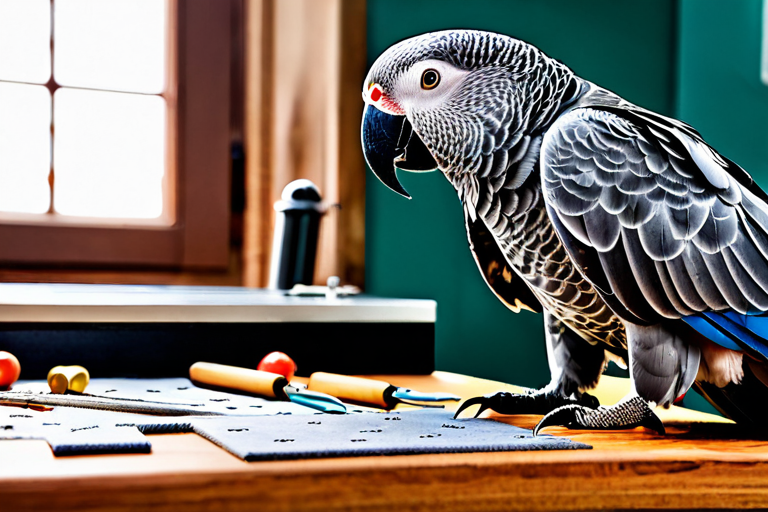
African Grey Parrot demonstrating tool use in cognitive research
The Avian Brain: A Neurological Marvel
Contrary to popular belief, birds possess highly developed brains with complex neural structures. The avian pallium, analogous to the mammalian cerebral cortex, contains densely packed neurons that enable sophisticated cognitive processing. According to research published in Proceedings of the National Academy of Sciences, some bird species have neuron densities exceeding those of primates relative to brain size.
Dr. Suzana Herculano-Houzel's comparative neuroanatomy studies reveal that parrots and corvids possess forebrain neuron counts comparable to medium-sized primates. This neural architecture supports advanced cognitive functions including:
- Complex problem-solving and tool use
- Episodic-like memory (remembering specific events)
- Theory of mind (understanding others' perspectives)
- Delayed gratification and future planning
Language and Communication: Beyond Mimicry
The most famous example of avian linguistic ability remains Alex, an African Grey Parrot studied by Dr. Irene Pepperberg for three decades. Alex demonstrated comprehension of over 100 words, could identify objects by color, shape, and material, and understood numerical concepts up to six. His abilities went beyond mere mimicry to include:
Key Findings from the Alex Studies
- Conceptual understanding of same/different relationships
- Ability to combine labels creatively ("yellow wood" for pine)
- Spontaneous use of phrases in appropriate contexts
- Demonstration of intentional communication
Recent research from the Cornell Lab of Ornithology has documented complex vocal learning in wild parrots, including regional dialects and cultural transmission of calls across generations. This suggests that vocal learning in birds shares evolutionary parallels with human language development.
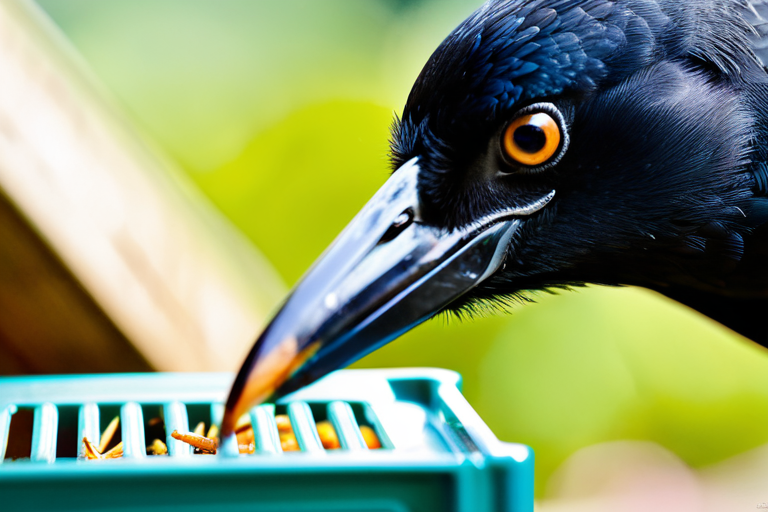
New Caledonian Crow demonstrating sequential tool use in laboratory setting
Corvid Intelligence: The Feathered Problem-Solvers
Corvids have demonstrated cognitive abilities that rival great apes in several domains. Research from the University of Cambridge's Comparative Cognition Lab has documented remarkable feats:
Tool Manufacturing and Use: New Caledonian crows not only use tools but manufacture them, bending wires into hooks and creating stepped tools from pandanus leaves. They can solve multi-step problems requiring sequential tool use, a capability once thought unique to humans.
Future Planning: Studies published in Science demonstrate that scrub jays can plan for future needs, caching food in locations where they anticipate being hungry later. They consider what food they'll want (not just what's available) and protect their caches from potential thieves.
Social Intelligence: Ravens engage in complex social maneuvering, forming alliances, recognizing individual relationships, and even holding grudges. Research from the University of Vienna shows they can understand when they're being watched and adjust their behavior accordingly.
Emotional Complexity in Avian Companions
Beyond cognitive abilities, companion birds display emotional depth that challenges traditional views of avian emotional life. Observations from avian veterinarians and behaviorists document:
Attachment and Bonding
Parrots form strong pair bonds with human companions, displaying separation anxiety, greeting rituals, and preference for specific individuals. Neuroendocrine studies show oxytocin-like responses during social bonding.
Empathetic Responses
Documented cases show birds comforting distressed companions, sharing food with sick flock members, and showing concern for injured humans. These behaviors suggest capacity for empathy.
Play and Creativity
Companion birds engage in complex play, invent games, and show individual preferences for activities. Some create art with provided materials, showing color and pattern preferences.
Practical Implications for Avian Companionship
Understanding avian cognition has profound implications for how we care for companion birds. The American Veterinary Medical Association now recommends enrichment strategies based on cognitive research:
- Cognitive Enrichment: Puzzle feeders, foraging opportunities, and problem-solving toys that challenge birds mentally
- Social Interaction: Regular, meaningful interaction that respects individual preferences and boundaries
- Environmental Complexity: Varied perches, changing layouts, and novel objects to stimulate exploration
- Communication Respect: Learning to interpret avian body language and vocalizations

Companion parrot interacting with cognitive enrichment system
Ethical Considerations and Future Research
The recognition of advanced avian cognition raises important ethical questions about bird ownership. Leading avian behaviorists argue for:
- Improved standards for captive environments that address cognitive needs
- Greater emphasis on adoption from rescue organizations
- Education about the long-term commitment required (some parrots live 50+ years)
- Support for conservation of wild populations facing habitat loss
Ongoing research at institutions like the Max Planck Institute continues to explore the boundaries of avian intelligence. Current studies investigate numerical cognition, causal reasoning, and the neural basis of complex behaviors.
Conclusion: Rethinking Our Feathered Companions
The emerging picture of avian cognition reveals minds far more complex than traditionally assumed. Parrots and corvids demonstrate capacities that force us to reconsider what it means to be intelligent. For those sharing their lives with these remarkable creatures, this understanding offers both responsibility and opportunity—the chance to engage with minds capable of complex thought, emotional depth, and genuine companionship.
As research continues to unveil the hidden depths of avian intelligence, we must approach our relationships with these creatures with renewed respect, curiosity, and commitment to their wellbeing.
References and Further Reading:
- Pepperberg, I. M. (2009). The Alex Studies: Cognitive and Communicative Abilities of Grey Parrots. Harvard University Press.
- Emery, N. J. (2006). Cognitive ornithology: The evolution of avian intelligence. Philosophical Transactions of the Royal Society B.
- Clayton, N. S., & Dickinson, A. (1998). Episodic-like memory during cache recovery by scrub jays. Nature.
- Güntürkün, O., & Bugnyar, T. (2016). Cognition without cortex. Trends in Cognitive Sciences.