The Unseen Architects of Human Civilization: How Domesticated Animals Shaped Our World
"The history of civilization is, in many ways, the history of our partnership with animals. From the first wolf that chose to stay by our fires to the cats that protected our grain stores, these creatures have been silent collaborators in human progress." — Dr. Eleanor Vance, Smithsonian Magazine
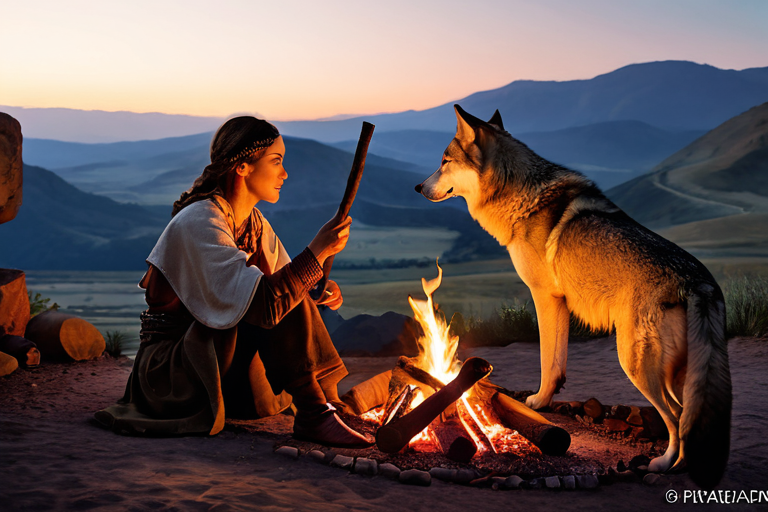
When we consider the monumental achievements of human civilization—the rise of agriculture, the development of cities, the expansion of trade networks—we often overlook the four-legged, winged, and scaled partners who made these advancements possible. The relationship between humans and domesticated animals represents one of the most profound and enduring partnerships in biological history, yet its full impact remains underappreciated in mainstream historical narratives.
The Agricultural Revolution: More Than Just Plants
Traditional accounts of the Neolithic Revolution focus almost exclusively on plant domestication, but according to research published in Science, animal domestication played an equally crucial role. The transition from hunter-gatherer societies to settled agricultural communities required more than just cultivated crops—it demanded reliable sources of protein, labor, and materials that only domesticated animals could provide.
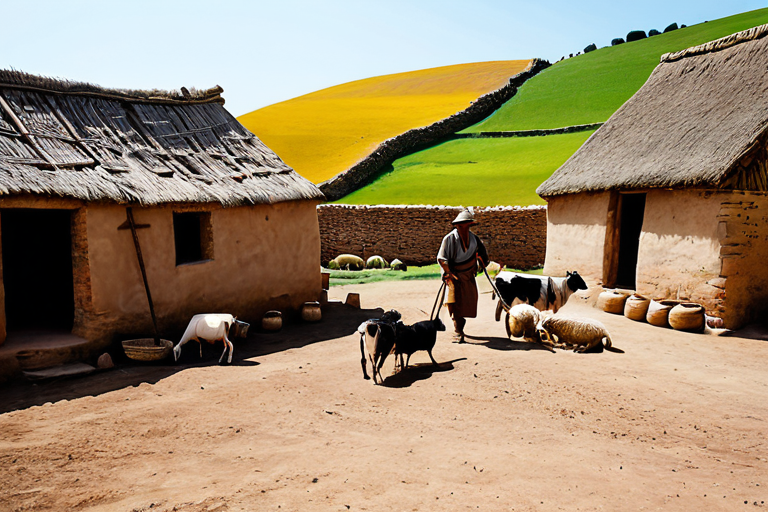
Archaeological evidence from sites like Çatalhöyük in Turkey and Jiahu in China reveals that early agricultural societies maintained complex relationships with multiple animal species simultaneously. Dogs provided protection and hunting assistance, goats and sheep offered milk and wool, while cattle transformed agricultural productivity through plowing and transportation. This multi-species approach created what anthropologists call "the domesticatory package"—a synergistic system that enabled human populations to grow and settle in ways previously impossible.
The Biological Exchange: How Animals Changed Human Genetics
One of the most fascinating aspects of animal domestication is its reciprocal nature. While humans were shaping animal evolution through selective breeding, animals were simultaneously influencing human biology. Research from the Nature journal reveals several remarkable examples of this co-evolution:
- Lactase Persistence: The ability to digest milk into adulthood evolved independently in multiple human populations that practiced dairy farming. This genetic adaptation, which spread rapidly through natural selection, represents one of the strongest examples of recent human evolution driven by animal domestication.
- Disease Resistance: Living in close proximity to animals exposed humans to new pathogens, but it also drove the development of enhanced immune systems. Genetic studies show that populations with long histories of animal husbandry have distinct immune profiles compared to those without such traditions.
- Metabolic Adaptations: The regular consumption of animal products influenced human metabolism and energy utilization patterns, contributing to the physical characteristics that distinguish modern humans from their Paleolithic ancestors.
The Economic Engine: Animals as Living Technology
Before the Industrial Revolution, animals served as the primary source of mechanical power for human societies. According to economic historians at Harvard University Press, the development of complex harnesses and yoking systems in ancient China and Mesopotamia represented technological breakthroughs comparable to the invention of the steam engine millennia later.
The ox-drawn plow, for instance, increased agricultural productivity by a factor of ten compared to hand tools. This surplus food production enabled specialization of labor, leading to the emergence of artisans, merchants, and scholars—the very foundation of urban civilization. Similarly, pack animals like donkeys and camels created the first long-distance trade networks, facilitating cultural exchange and economic integration across continents.
The Cognitive Revolution: How Animals Shaped Human Thought
Perhaps the most profound impact of animal domestication lies in its influence on human cognition and social organization. Studies published in Proceedings of the National Academy of Sciences suggest that managing animal herds required the development of new cognitive abilities:
Future Planning
Herding animals requires anticipating seasonal migrations, planning breeding cycles, and managing resources for lean periods—skills that translate directly to agricultural and economic planning.
Social Coordination
Managing large herds necessitated complex social organization and communication systems, laying the groundwork for more sophisticated human societies.
Empathetic Understanding
Successful animal husbandry requires reading animal behavior and responding to their needs—an exercise in cross-species empathy that may have enhanced human social intelligence.
The Cultural Legacy: Animals in Myth, Religion, and Identity
Domesticated animals permeate human culture at every level. From the sacred cows of Hinduism to the pastoral imagery of the Bible, animals serve as powerful symbols and metaphors. Research from the Metropolitan Museum of Art collections demonstrates how animal imagery has been central to human artistic expression for millennia.
In ancient Egypt, cats were associated with the goddess Bastet and were believed to possess protective qualities. In Norse mythology, the goat Heiðrún provided mead for the gods, while her counterpart in the mortal world supplied milk for humans. These mythological connections reflect the practical importance of these animals in daily life while elevating them to cosmic significance.
Even today, animals continue to shape human identity and social structures. The concept of "pet ownership," while relatively recent in evolutionary terms, has created new forms of social bonding and emotional support. Service animals demonstrate the ongoing practical partnership between humans and animals, while the growing recognition of animal sentience challenges us to reconsider our ethical responsibilities toward our domesticated partners.
The Modern Paradox: Industrialization and Reconnection
The Industrial Revolution created a paradoxical relationship with domesticated animals. On one hand, mechanization reduced our practical dependence on animal labor. On the other hand, urbanization increased emotional dependence on companion animals. According to data from the American Veterinary Medical Association, pet ownership has steadily increased even as direct contact with production animals has decreased for most urban populations.

This shift has created what anthropologists call "the companion animal phenomenon"—a unique historical moment where animals are valued primarily for emotional rather than economic reasons. Yet even this modern relationship carries echoes of our ancient partnership. The same empathy and understanding that made early herders successful now makes us attentive pet owners. The same protective instincts that valued guard dogs in ancient settlements now values emotional support animals in modern cities.
Looking Forward: The Future of Human-Animal Partnerships
As we face global challenges like climate change, food security, and mental health crises, our relationship with animals continues to evolve. Emerging research suggests that sustainable agricultural practices may require rethinking our approach to animal husbandry, while advances in animal cognition research challenge us to expand our ethical considerations.
The development of animal-assisted therapies represents a new frontier in our ancient partnership, applying our understanding of human-animal bonds to address modern health challenges. Meanwhile, conservation efforts for domesticated species' wild ancestors remind us of the biological origins of our partnership and our responsibility to preserve genetic diversity.
Key Takeaways
- Animal domestication was not merely a supplement to plant agriculture but a co-equal driver of civilization
- The human-animal relationship has been reciprocal, with animals influencing human genetics and cognition
- Animals served as the primary source of mechanical power and transportation for most of human history
- Our partnership with animals has shaped human culture, religion, and social organization
- The modern companion animal phenomenon represents an evolution rather than a departure from our historical relationship
In conclusion, the story of human civilization cannot be fully understood without acknowledging the silent partners who have walked beside us for millennia. From the wolves who became dogs to the wild bovines who became cattle, these animals have been more than just resources—they have been collaborators in the human experiment. As we move forward into an increasingly technological future, understanding this deep history may help us build more sustainable and ethical relationships with the animals who share our world.
References and Further Reading:
- Diamond, J. (1997). Guns, Germs, and Steel: The Fates of Human Societies. W.W. Norton & Company.
- Budiansky, S. (1992). The Covenant of the Wild: Why Animals Chose Domestication. William Morrow.
- Serpell, J. (1996). In the Company of Animals: A Study of Human-Animal Relationships. Cambridge University Press.
- Recent studies from Science, Nature, and PNAS on co-evolution and domestication