The Unseen Language of Feline Whiskers: Decoding the Sensory World of Cats
While cat owners often focus on meows, purrs, and tail movements, the most sophisticated communication system in felines remains largely overlooked—their whiskers. These specialized hairs serve as multi-functional sensory tools that reveal a cat's emotional state, environmental awareness, and even health status.
The Anatomy of Feline Whiskers
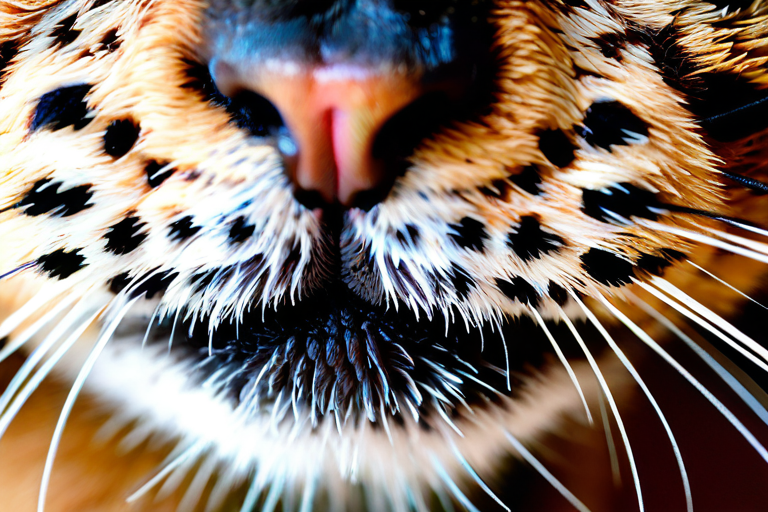
Contrary to popular belief, whiskers (vibrissae) are not ordinary hairs. According to research published in the Journal of Feline Medicine and Surgery, each whisker follicle contains approximately 100-200 nerve endings, making them incredibly sensitive tactile organs. These specialized hairs are embedded three times deeper in the skin than regular fur and are connected to a rich network of blood vessels and nerves.
The typical domestic cat possesses between 16-24 mystacial whiskers (those on either side of the nose), arranged in four horizontal rows. Additional whiskers can be found above the eyes (superciliary), on the cheeks (genal), and on the back of the front legs (carpal). Each set serves distinct purposes in spatial awareness and hunting.
Sensory Functions Beyond Touch
Whiskers function as sophisticated environmental scanners. A study from Current Biology reveals that whiskers can detect minute air currents, allowing cats to sense approaching objects or animals even in complete darkness. This ability stems from the whiskers' capacity to vibrate at specific frequencies when air moves around them, sending precise signals to the brain about object size, shape, and distance.
Key Whisker Functions:
- Spatial Navigation: Whiskers help cats determine if they can fit through openings
- Prey Detection: Sensitive to subtle movements of small animals
- Mood Indicators: Position reveals emotional state
- Balance Assistance: Contribute to proprioception and coordination
- Environmental Mapping: Create mental maps of surroundings
Whisker Positioning as Emotional Communication
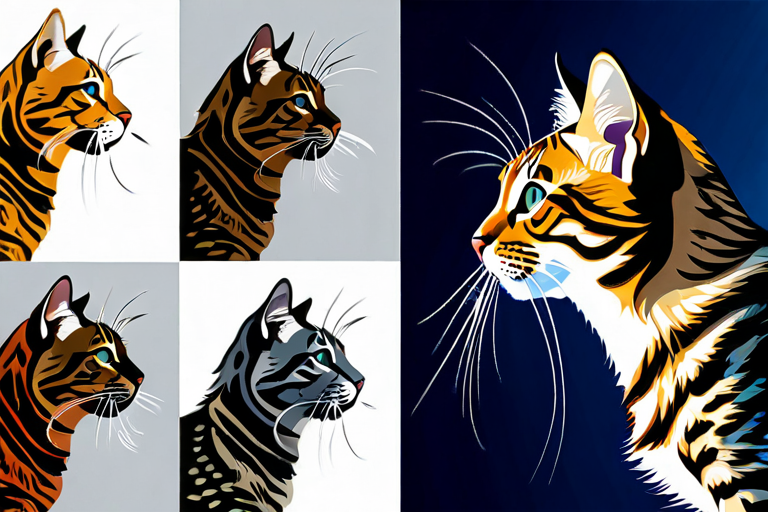
Feline behaviorists at the ASPCA have documented consistent correlations between whisker position and emotional states:
Relaxed State: Whiskers extend sideways in a natural, slightly forward position. This indicates contentment and environmental comfort.
Alert/Curious: Whiskers fan forward, creating a wider sensory field. This position maximizes environmental information gathering during exploration or hunting preparation.
Anxious/Defensive: Whiskers pull back tightly against the face, reducing sensory input and protecting these delicate organs. This often accompanies flattened ears and dilated pupils.
Aggressive: Whiskers point directly forward in a stiff, rigid formation. This maximizes threat assessment capabilities during confrontations.
Whisker Fatigue: A Modern Feline Concern
Veterinary researchers at Cornell Feline Health Center have identified "whisker fatigue" as a legitimate welfare concern. This condition occurs when whiskers are overstimulated by constant contact with food or water bowls, particularly deep or narrow containers.
Symptoms include:
Behavioral Signs
Pawing food from bowl, eating with paws, reluctance to eat/drink, dropping food beside bowl
Physical Indicators
Whisker twitching, facial rubbing, avoidance of bowl contact, stress grooming
Prevention involves using wide, shallow bowls that don't contact whiskers during feeding. Ceramic or stainless steel bowls with a diameter of at least 15 centimeters are recommended by feline welfare organizations.
Developmental Changes Across Life Stages
Whisker development follows specific patterns throughout a cat's life. Kittens are born with fully formed whiskers that begin functioning within days. According to developmental studies referenced by American Veterinary Medical Association, whisker sensitivity peaks between 2-4 years of age, then gradually declines with seniority.
Neonatal Phase (0-2 weeks): Whiskers aid in locating mother and littermates through touch and vibration detection.
Juvenile Period (2 weeks-6 months): Whiskers develop full sensitivity, crucial for learning hunting techniques and spatial navigation.
Adult Stage (1-7 years): Optimal whisker function supports hunting, territory navigation, and social interactions.
Senior Years (8+ years): Gradual reduction in whisker sensitivity may contribute to navigation difficulties in older cats.
Whisker Health and Care Guidelines
Proper whisker care is essential for feline wellbeing. Veterinary dermatologists emphasize several key principles:
- Never Trim Whiskers: Cutting whiskers disorients cats and causes significant stress. They should only be trimmed for medical procedures under veterinary supervision.
- Monitor for Damage: Broken or bent whiskers may indicate environmental hazards or health issues requiring attention.
- Provide Appropriate Environments: Ensure living spaces accommodate whisker span without constant contact with surfaces.
- Regular Veterinary Checks: Include whisker examination in routine health assessments, particularly for senior cats.
Practical Applications for Cat Owners
Understanding whisker language enables better care and communication:
- Choose feeding stations that minimize whisker contact
- Interpret stress signals through whisker positioning
- Create environments that respect whisker spatial needs
- Recognize when veterinary consultation is needed for whisker-related issues
- Enhance bonding through understanding this subtle communication system
Comparative Perspectives: Whiskers Across Species
While feline whiskers are particularly sophisticated, similar vibrissae systems exist in other mammals. Research from Nature Scientific Reports indicates that rodents, seals, and some primates possess analogous structures, though none match the complexity of feline whisker-brain integration.
Key differences include:
| Species | Whisker Function | Sensitivity Level |
|---|---|---|
| Domestic Cats | Navigation, hunting, communication | Extremely high |
| Rats/Mice | Tactile exploration, social interaction | High |
| Seals | Underwater prey detection | Specialized for aquatic environments |
Future Research Directions
Emerging studies are exploring several promising areas:
Neurobiological Mapping: Advanced imaging techniques are revealing how whisker signals are processed in feline brains, with potential applications for understanding sensory integration in mammals.
Welfare Applications: Research into whisker-friendly environments could revolutionize shelter design and domestic cat housing standards.
Comparative Cognition: Studies examining how different species utilize similar sensory systems may provide insights into evolutionary adaptations.
Clinical Applications: Understanding whisker function could improve diagnosis of neurological conditions in both veterinary and human medicine.

Conclusion
Feline whiskers represent one of nature's most sophisticated sensory adaptations, serving functions far beyond simple tactile perception. These specialized hairs provide cats with detailed environmental information, facilitate complex communication, and contribute significantly to their remarkable agility and hunting prowess. By understanding and respecting this delicate system, cat owners can enhance their pets' welfare, strengthen interspecies bonds, and appreciate the intricate biological marvel that is the domestic feline.
Further reading and research citations available through veterinary associations and peer-reviewed journals specializing in feline medicine and animal behavior studies.