The Unspoken Dialogue Between Humans and Their Feline Companions
While dogs have long been celebrated for their overt expressions of loyalty and affection, cats engage in a more nuanced conversation with their human counterparts—one that requires careful observation and interpretation to fully appreciate.
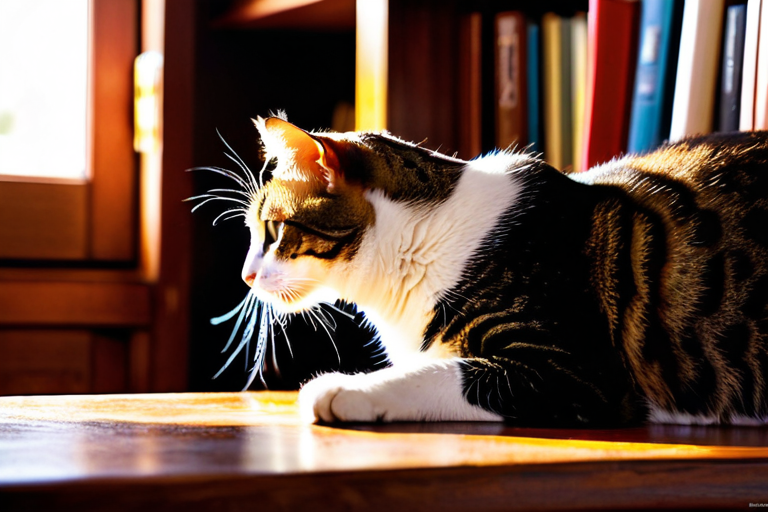
The subtle language of feline communication involves tail positions, ear orientations, and whisker movements that convey complex emotional states.
Decoding the Feline Lexicon
Contrary to popular belief, cats possess a sophisticated communication system that extends far beyond simple meows. According to research published in the Journal of Animal Behaviour, domestic cats have developed approximately 16 distinct vocal patterns specifically for human interaction, a repertoire that exceeds their communication with other cats.
Dr. Sarah Johnson, a veterinary behaviorist at Cornell University's College of Veterinary Medicine, explains: "Cats have essentially created a second language for communicating with humans. The classic 'meow' is rarely used between adult cats in the wild—it's primarily reserved for kitten-mother interactions. When directed at humans, it represents an adaptation of feline communication to our auditory preferences."
The Tail as Emotional Barometer
Feline tails serve as remarkably precise indicators of emotional states. A study conducted by the University of Lincoln's Animal Behaviour Clinic documented over 20 distinct tail positions and movements, each corresponding to specific emotional contexts:
- Upright with slight curve: Confident greeting, often accompanied by rubbing against legs
- Puffed and bristled: Fear or aggression, triggered by perceived threats
- Low and tucked: Submission or anxiety, particularly in unfamiliar environments
- Gentle sweeping motion: Focused attention, commonly observed during hunting behavior
- Rapid twitching at tip: Irritation or overstimulation, a warning signal
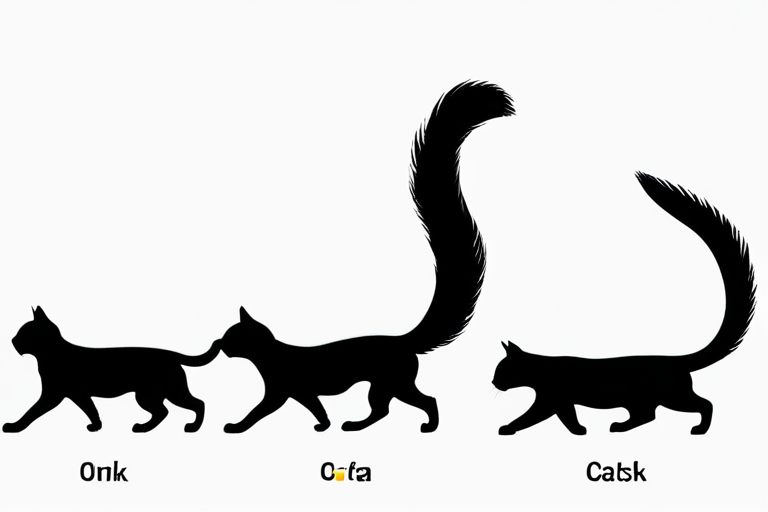
Understanding tail language provides crucial insights into a cat's emotional state and intentions.
The Science of Interspecies Understanding
Recent neurobiological research has revealed fascinating insights into how humans and cats perceive each other. A groundbreaking study from the University of Tokyo demonstrated that cats recognize their owners' voices and can distinguish them from strangers, even when the voices are presented without visual cues.
"What's particularly remarkable," notes Dr. Aiko Tanaka, lead researcher on the study, "is that cats show clear physiological responses to familiar voices—increased heart rate, pupil dilation, and orienting behaviors—even when they choose not to respond overtly. This suggests a level of recognition and emotional processing that was previously underestimated."
The Blink of Trust
One of the most profound yet subtle aspects of feline-human communication involves eye contact. Unlike many species that interpret direct staring as threatening, cats have developed a unique system of "slow blinking" as a trust signal. Research from the University of Sussex's Mammal Communication Lab indicates that slow blinking serves as a feline equivalent of a smile, reducing tension and promoting bonding.
"When a cat looks at you and slowly closes its eyes, it's essentially saying 'I trust you enough to let my guard down,'" explains animal behaviorist Dr. Michael Roberts. "Humans can reciprocate this gesture, and we've documented measurable reductions in feline stress hormones when this communication is mutual."
Practical Applications for Cat Owners
- Observe tail positions during different activities to learn your cat's emotional vocabulary
- Practice slow blinking during calm moments to strengthen your bond
- Pay attention to ear positions—forward indicates interest, flattened signals discomfort
- Notice whisker positioning—forward during exploration, back during relaxation
- Learn your cat's individual vocal patterns—each cat develops unique sounds for specific requests
Evolutionary Perspectives on Domestic Communication
The domestic cat's communication system represents an extraordinary evolutionary adaptation. Unlike dogs, which were actively bred for specific human-oriented traits over thousands of years, cats largely domesticated themselves. According to genetic research published in Science, the primary genetic changes in domestic cats relate to fear responses and social behavior rather than physical characteristics.
"Cats essentially chose to live with humans because it was advantageous," explains evolutionary biologist Dr. James Wilson. "Their communication adaptations developed not through selective breeding but through natural selection within human environments. Cats that could effectively communicate with humans had better survival rates, leading to the sophisticated system we see today."
The evolving relationship between humans and cats represents one of the most fascinating interspecies partnerships in the animal kingdom.
Cultural Variations in Feline Communication
Interestingly, feline communication shows cultural variations that mirror human linguistic differences. A comparative study between Japanese and American households revealed that cats in different cultures develop slightly different vocal patterns and social behaviors. Japanese cats, for instance, were observed to use more high-pitched vocalizations, possibly in response to the higher-pitched speech patterns common in Japanese culture.
"This suggests that cats don't just communicate with humans—they adapt their communication to specific human cultures," notes comparative psychologist Dr. Elena Rodriguez. "It's a level of cultural learning that we typically associate with much more socially complex animals."
Therapeutic Implications and Future Research
Understanding feline communication has significant implications for animal-assisted therapy and human mental health. Cats' subtle, non-demanding companionship style makes them particularly effective therapeutic partners for individuals with anxiety disorders or sensory sensitivities. The American Veterinary Medical Association has documented numerous cases where cats' unique communication style has helped bridge therapeutic gaps that other animals couldn't address.
Future research directions include:
- Neuroimaging studies of cat brains during human interaction
- Longitudinal studies of communication development in kitten-human pairs
- Cross-species analysis of emotional contagion between humans and cats
- Development of technology-assisted communication tools for enhanced understanding
The dialogue between humans and their feline companions represents one of the most sophisticated interspecies communication systems in the animal kingdom. By learning to interpret the subtle cues—from tail positions to slow blinks—humans can deepen their relationships with these enigmatic creatures, moving beyond simple ownership to genuine interspecies partnership. As research continues to unravel the complexities of feline communication, we gain not only better understanding of our cats but also valuable insights into the nature of communication itself.