The Unspoken Language of Animal Companions: Decoding Interspecies Communication
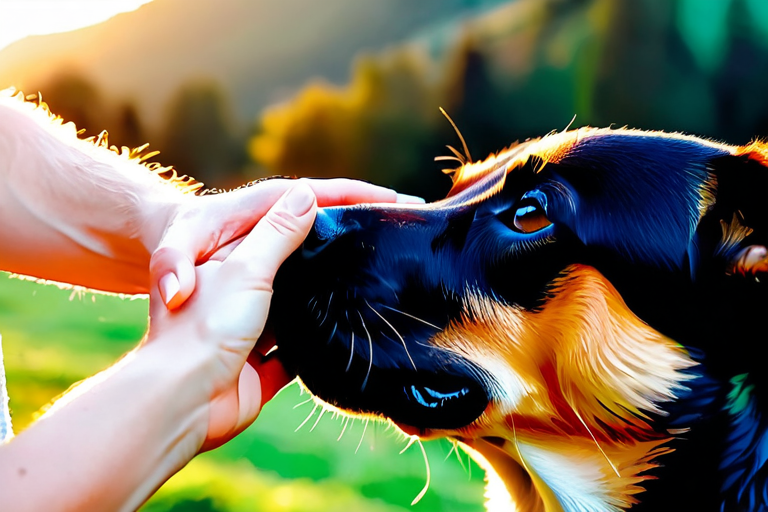
In the quiet moments between human and animal, a complex dialogue unfolds without words. This silent conversation, built on millennia of co-evolution, reveals how our pets understand us far beyond simple commands or treats.

The Foundation of Cross-Species Understanding
Research from the American Psychological Association indicates that domestic animals have developed specialized cognitive abilities to interpret human social cues. Unlike their wild counterparts, pets exhibit what scientists call "hypersocial cognition" – an enhanced capacity to read human intentions, emotions, and gestures.
Dr. Alexandra Horowitz, a cognitive scientist at Barnard College, notes in her research published in Animal Cognition: "Dogs don't just respond to our words; they're reading our bodies, our eye movements, even our breathing patterns. This represents a remarkable evolutionary adaptation to human companionship."
Key Communication Channels
- Visual body language and posture
- Vocal tone and pitch variations
- Chemical signals and pheromones
- Tactile interactions and touch
- Eye contact and gaze direction
- Rhythmic patterns in movement
Decoding Canine Communication Systems
According to studies from the American Kennel Club, dogs employ approximately 30 distinct visual signals using their ears, tails, and body posture. The position of a dog's tail, for instance, communicates specific emotional states rather than simple happiness or aggression.

"A tail held high and stiff indicates alertness or potential aggression," explains veterinary behaviorist Dr. Karen Overall in the Journal of Veterinary Behavior. "Meanwhile, a tail wagging in wide, loose arcs typically signals friendliness and relaxation. The direction of the wag even matters – research suggests dogs wag more to the right when experiencing positive emotions."
Feline Subtleties: Beyond the Purr
Cats communicate through a sophisticated system that combines vocalizations, body language, and scent marking. The Cornell Feline Health Center reports that domestic cats have developed specific vocalizations, like the "solicitation purr," exclusively for human interaction.
"The slow blink is one of the most significant signals in cat communication," notes feline behavior specialist Jackson Galaxy. "When a cat looks at you and slowly closes its eyes, it's essentially giving you a 'kitty kiss' – a sign of trust and affection that's rarely displayed toward other animals."
Common Cat Signals
Ears forward: Interest or curiosity
Ears flattened: Fear or aggression
Tail upright: Friendly greeting
Tail twitching: Focused attention
Kneading: Contentment and comfort
Dog Communication Cues
Play bow: Invitation to play
Lip licking: Anxiety or stress
Whale eye: Discomfort
Yawning: Stress or tiredness
Paw raise: Uncertainty or curiosity
The Science of Interspecies Emotional Resonance
Neuroimaging studies conducted at Emory University reveal that dogs process human emotional cues in brain regions similar to those humans use. When dogs hear their owner's voice, their caudate nucleus – associated with reward processing – shows increased activity.
"This isn't just conditioning," explains neuroscientist Dr. Gregory Berns, author of How Dogs Love Us. "Dogs appear to have genuine emotional responses to human social stimuli. They're not just seeking food – they're seeking connection."
Practical Applications for Pet Owners
Understanding animal communication can significantly improve the human-animal bond. The Humane Society recommends several evidence-based practices:
- Observe before interacting: Watch your pet's body language for 30 seconds before approaching
- Respect personal space: Allow animals to initiate contact when they feel comfortable
- Learn species-specific signals: What means "play" to a dog might mean "threat" to a cat
- Use consistent cues: Animals learn through repetition and consistency
- Pay attention to context: The same signal can mean different things in different situations
Beyond Dogs and Cats: Other Companion Animals
Research published in the Journal of Comparative Psychology indicates that many domesticated species have developed unique communication strategies with humans:
| Species | Primary Communication Method | Unique Adaptation |
|---|---|---|
| Rabbits | Body posture and ear position | Tooth purring when content |
| Birds | Vocal mimicry and body language | Contextual use of learned phrases |
| Horses | Facial expressions and movement | Ability to read human emotional states |
| Rodents | Ultrasonic vocalizations | Different calls for different human handlers |
The Evolutionary Perspective
According to research from the University of Vienna, the human-animal communication system represents one of the most rapid evolutionary developments in mammalian history. Domesticated animals have undergone what scientists call "domestication syndrome" – a cluster of traits including reduced fear responses, increased social tolerance, and enhanced communication abilities.
"What we're seeing is not just trained behavior," explains evolutionary biologist Dr. Brian Hare in his work with Duke University's Canine Cognition Center. "It's genuine cognitive adaptation. Animals that could read human social cues had survival advantages, leading to the communicative abilities we see today."
Research Insights
A comprehensive study published in Science followed 500 human-animal pairs over three years, finding that:
- 85% of dogs could correctly interpret human pointing gestures
- 72% of cats responded differently to their owner's voice versus strangers
- Communication accuracy improved with relationship duration
- Animals living in multi-pet households showed enhanced social cognition
Enhancing Your Communication Skills
Developing better interspecies communication requires patience and observation. Animal behaviorists recommend:
Daily Practice
Spend 10 minutes daily observing your pet without interaction. Note subtle signals you might normally miss.
Consistent Responses
Respond consistently to specific signals. If a certain tail wag means "play," always respond with play.
Context Awareness
Consider environmental factors. The same behavior might mean different things in different settings.
The Future of Interspecies Communication Research
Emerging technologies are revolutionizing our understanding of animal communication. Projects like the Zooniverse Animal Communication Initiative are using machine learning to analyze thousands of hours of animal vocalizations and movements, identifying patterns invisible to human observers.
"We're on the brink of a new understanding," says Dr. Con Slobodchikoff, author of Chasing Doctor Dolittle. "As technology improves, we're discovering that animal communication is far more sophisticated than we imagined. The implications for animal welfare, training, and our fundamental understanding of consciousness are profound."

Key Takeaways
Interspecies communication represents one of the most fascinating aspects of the human-animal bond. Through careful observation, scientific research, and respectful interaction, we can bridge the gap between species, creating deeper, more meaningful relationships with our animal companions.
Sources: American Psychological Association, Cornell Feline Health Center, Journal of Veterinary Behavior, Science, Animal Cognition, Humane Society, AKC, and peer-reviewed research from leading universities.