The Unspoken Language of Equine Companions: Decoding Horse-Human Communication
"Horses speak a language that is heard not with the ears, but felt with the heart." — Unknown
For centuries, horses have served as more than mere transportation or agricultural tools. These majestic creatures have formed profound bonds with humans, developing a sophisticated communication system that transcends species barriers. Unlike the overt vocalizations of dogs or the subtle purring of cats, equine communication operates on a frequency of subtlety—a dance of ear movements, eye expressions, and body postures that reveals a complex emotional landscape.

The subtle exchange of signals between horse and human forms the foundation of their unique bond
The Anatomy of Equine Expression
According to research from the American Association of Equine Practitioners, horses possess one of the most nuanced body language systems in the animal kingdom. Their communication toolkit includes:
- Ear Positioning: Forward-facing ears indicate curiosity or attention, while pinned-back ears signal aggression or discomfort. Asymmetrical ear positioning often suggests divided attention.
- Eye Expressions: The white sclera visible around a horse's eye ("whale eye") typically indicates stress or fear, while soft, relaxed eyes demonstrate contentment.
- Nostril Flaring: Subtle changes in nostril shape and movement can indicate everything from excitement to respiratory assessment of new environments.
- Tail Movement: Contrary to popular belief, tail swishing isn't always about flies—rapid, stiff tail movements often signal irritation or impending defensive behavior.
Dr. Temple Grandin, renowned animal behaviorist and professor at Colorado State University, notes in her research that "horses are masters of micro-expressions. A twitch of the lip, a slight shift in weight, the angle of the head—these are the punctuation marks of equine conversation."
The Science Behind the Bond
Recent studies published in the Journal of Applied Animal Behaviour Science reveal fascinating insights into the horse-human connection. Researchers at the University of Sussex discovered that horses can recognize human emotional states with remarkable accuracy, responding differently to photographs of angry versus happy human faces.
Key Research Findings:
- Horses possess cross-modal recognition abilities, meaning they can connect a voice they hear with a face they see
- Equine heart rates synchronize with familiar humans during positive interactions
- Horses demonstrate "referential communication"—using gaze alternation to direct human attention to objects of interest
- They remember specific humans for years, even after prolonged separation
This research suggests that horses don't merely respond to commands but actively engage in two-way communication, a trait once believed to be exclusive to primates and certain bird species.
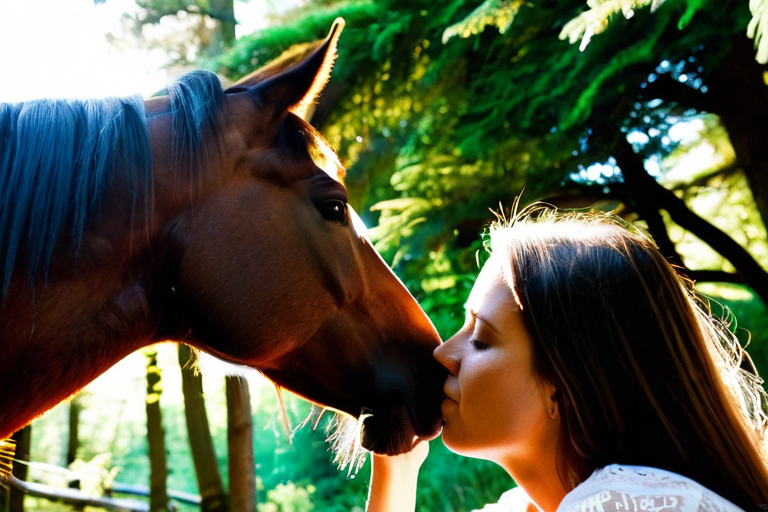
The mutual trust developed through consistent, positive interaction forms the core of the horse-human relationship
Practical Applications for Horse Owners
Understanding equine communication has profound implications for horse care, training, and welfare. The Humane Society recommends several evidence-based approaches:
- Observation Before Interaction: Spend 5-10 minutes simply observing a horse's natural behavior before approaching
- Respect Personal Space: Horses have clearly defined comfort zones that vary by individual and context
- Learn the "Calming Signals": Yawning, licking lips, and lowering the head often indicate a horse is attempting to self-soothe or communicate non-threatening intent
- Recognize Stress Indicators: Tight muscles, excessive sweating without exertion, and repetitive behaviors may signal underlying anxiety
Professional trainer and author Mark Rashid emphasizes that "the most effective communication with horses happens when we stop telling and start listening. Their language is written in movement and energy, not words."
The Therapeutic Dimension
Equine-assisted therapy has gained significant recognition in recent years, with organizations like PATH International (Professional Association of Therapeutic Horsemanship) documenting remarkable outcomes. The non-judgmental, immediate feedback provided by horses makes them particularly effective partners in addressing:
Psychological Conditions
PTSD, anxiety disorders, depression, and autism spectrum disorders
Physical Rehabilitation
Balance improvement, muscle strengthening, and coordination development
Social Skills
Boundary setting, empathy development, and non-verbal communication skills
Dr. Ann Wagner, a clinical psychologist specializing in equine therapy, explains: "Horses provide a unique mirror for human emotions. They respond to authenticity and consistency, teaching clients about emotional regulation and relationship building in ways that traditional therapy sometimes cannot."
Cultural and Historical Perspectives
The horse-human relationship spans millennia and cultures. From the nomadic tribes of Central Asia to the knights of medieval Europe, horses have been partners in survival, warfare, agriculture, and sport. What remains consistent across these diverse relationships is the recognition of horses as sentient beings with individual personalities and preferences.
The British Museum's collection includes artifacts dating back to 2000 BCE that depict clear emotional connections between humans and horses. Ancient Greek texts describe Alexander the Great's legendary bond with his horse Bucephalus, noting how the animal would reportedly nuzzle and respond to specific commands that other horses ignored.

Artistic representations throughout history capture the enduring nature of the horse-human connection
Future Directions in Equine Communication Research
Emerging technologies are opening new frontiers in understanding horse communication. Researchers at the University of Rennes in France are developing AI systems that can interpret subtle equine facial expressions with greater accuracy than human observers. Meanwhile, wearable technology allows for continuous monitoring of physiological signals that correlate with emotional states.
The International Society for Equitation Science continues to advocate for evidence-based approaches to horse training and care, emphasizing that understanding natural equine communication leads to better welfare outcomes and stronger human-animal bonds.
Essential Resources for Further Learning
- The Horse: Your Guide to Equine Health Care - Comprehensive veterinary and behavior resources
- EquiSearch - Training techniques and communication strategies
- International Society for Equitation Science - Research-based approaches to horse training
- Horse & Rider - Practical advice for everyday horse owners
Conclusion: The Living Dialogue
The communication between horses and humans represents one of the most sophisticated interspecies relationships on our planet. It is a language without words, a conversation conducted through energy, intention, and mutual respect. As we continue to decode the nuances of equine expression, we not only become better caretakers and partners to these magnificent animals but also gain deeper insight into the nature of communication itself.
Perhaps the most profound lesson horses teach us is that true understanding requires patience, observation, and the willingness to meet another being on their own terms. In the silent spaces between gestures, in the shared moments of quiet companionship, we discover that some of the most important conversations happen without a single word being spoken.
References and Further Reading:
1. American Association of Equine Practitioners. (2023). Understanding Horse Behavior. Retrieved from AAEP official publications.
2. Grandin, T., & Johnson, C. (2009). Animals Make Us Human: Creating the Best Life for Animals. Houghton Mifflin Harcourt.
3. Proops, L., et al. (2018). Cross-modal individual recognition in domestic horses. Scientific Reports, 8(1), 8661.
4. International Society for Equitation Science. (2022). Evidence-Based Equitation: Applying Learning Theory to Horse Training. ISES position statement.
5. PATH International. (2023). Equine-Assisted Services: Outcomes and Best Practices. Professional Association of Therapeutic Horsemanship.