Unraveling the Mystery of Pet Dreams: What Goes on in Their Sleeping Minds
Have you ever watched your dog twitch, whimper, or paddle its legs during sleep and wondered what's happening in its mind? Or observed your cat's whiskers twitching and paws kneading while dozing? These behaviors aren't random—they're windows into the complex world of animal dreams, a subject that has fascinated scientists and pet owners alike for decades.
The Science of Animal Sleep Cycles
Research from the National Institutes of Health reveals that mammals, including our domestic companions, experience sleep cycles remarkably similar to humans. These cycles consist of two main phases: non-REM (rapid eye movement) sleep and REM sleep. It's during REM sleep that most dreaming occurs in humans, and mounting evidence suggests the same is true for animals.
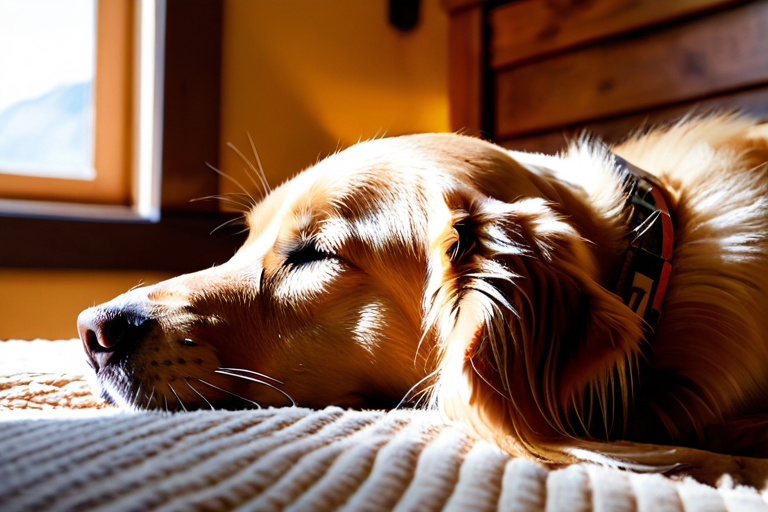
A dog exhibiting classic REM sleep behaviors including paw twitching and eye movement
According to studies published in the Journal of Comparative Neurology, the brain structures responsible for dreaming in humans—particularly the hippocampus and amygdala—are present and functional in both dogs and cats. These regions process memory and emotion, suggesting our pets might be reliving experiences or processing emotions during sleep.
Decoding Dream Behaviors: What Those Twitches Mean
Veterinary neurologists have identified specific sleep behaviors that correlate with different types of dreaming:
- Paw Twitching and Running Motions: Often indicates dream sequences involving movement, such as chasing or playing
- Whimpering or Soft Barking: May correspond to social interactions or communication in dreams
- Tail Wagging While Asleep: Suggests positive emotional content in canine dreams
- Ear Twitching and Whisker Movement: In cats, these often indicate sensory processing during dreams
- Sudden Jerks or Startles: Similar to human hypnic jerks, these may occur during sleep transitions
Dr. Stanley Coren, a professor of psychology at the University of British Columbia and author of "How Dogs Think," notes in his research that dogs' dream content often reflects their daily experiences. "Working dogs might dream about herding or retrieving, while companion dogs likely dream about interactions with their human families," he explains in an interview with the American Psychological Association.
Species-Specific Dream Patterns
Canine Dream Characteristics
Dogs enter REM sleep approximately 20 minutes after falling asleep and spend about 10-12% of their sleep in this phase. Puppies and senior dogs experience more REM sleep than adult dogs. Research from Harvard University's Animal Cognition Center suggests that dogs' dreams are more frequent but shorter than human dreams, typically lasting 2-3 minutes.
Feline Sleep Architecture
Cats are champion sleepers, dozing 12-16 hours daily with about 30% in REM sleep. Their dreams appear more vivid during the early morning hours. Studies cited by the American Veterinary Medical Association indicate that cats' dreams often involve hunting sequences, even in indoor cats who have never hunted.
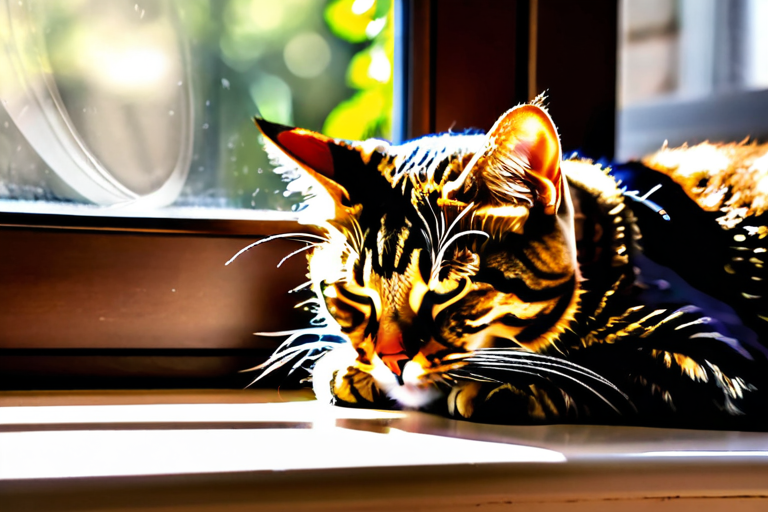
A domestic cat exhibiting rapid eye movement during deep sleep phase
The Memory Consolidation Hypothesis
Neuroscientists propose that animal dreams serve similar functions to human dreams in memory processing. The "memory consolidation theory," supported by research from MIT's Picower Institute for Learning and Memory, suggests that during REM sleep, animals replay and reinforce important memories from their waking hours.
This theory is bolstered by experiments where rats running mazes show similar hippocampal activity patterns during subsequent sleep. While direct evidence in domestic pets is limited by ethical constraints, observational studies of sleeping dogs who have learned new tasks show increased sleep twitching correlated with better retention of those tasks.
Emotional Processing During Sleep
Beyond memory consolidation, animal dreams may serve emotional regulation functions. The amygdala, which processes emotions, shows increased activity during REM sleep in both humans and animals. This suggests pets might be processing emotional experiences—both positive and negative—during their dreams.
Veterinary behaviorists note that pets who experience trauma or significant stress often show disrupted sleep patterns or what appear to be nightmares. These episodes, characterized by distressed vocalizations, trembling, or attempts to hide while asleep, may represent the animal's brain processing difficult experiences.
Practical Implications for Pet Owners
Understanding pet dreams has practical applications for animal welfare:
- Respect Sleep Cycles: Avoid waking pets during REM sleep unless necessary, as abrupt awakenings can be disorienting
- Provide Enrichment: Positive waking experiences likely translate to positive dream content
- Monitor Sleep Patterns: Changes in sleep behaviors can indicate health or stress issues
- Create Safe Sleeping Environments: Comfortable, secure sleeping areas support healthy sleep architecture
The Evolutionary Perspective
From an evolutionary standpoint, dreaming likely conferred adaptive advantages to ancestral species. The ability to "practice" behaviors during sleep without physical risk could have enhanced survival skills. This theory, discussed in evolutionary biology journals, suggests that the dream behaviors we observe in modern pets are echoes of their wild ancestors' survival mechanisms.
Comparative studies across species reveal that dreaming is not unique to mammals with complex brains. Birds, particularly corvids and parrots, show evidence of REM sleep and possible dreaming. Even some reptiles exhibit sleep states with brain activity patterns suggesting primitive forms of dreaming.
Different species exhibit unique but related sleep patterns and dream behaviors
Current Research Frontiers
Modern research into animal dreams employs increasingly sophisticated methods:
- Non-invasive EEG monitoring to track brain waves during sleep
- Functional MRI studies of sleeping animals (in limited ethical applications)
- Behavioral correlation studies linking waking experiences to sleep behaviors
- Genetic research examining sleep-related genes across species
The Society for Neuroscience reports ongoing studies investigating whether animals experience lucid dreaming (awareness of dreaming while it occurs) and how dream content varies with age, breed, and individual experience.
Ethical Considerations and Future Directions
As research advances, ethical questions emerge about how much we should intervene in animals' dream experiences. While sedatives or sleep aids might reduce apparent nightmares, they could also interfere with natural memory consolidation and emotional processing.
Future research directions likely include:
Dream Content Analysis
Developing better methods to infer dream content from physiological signals
Therapeutic Applications
Using sleep and dream understanding to address animal anxiety and trauma
Comparative Studies
Examining dream similarities and differences across domestic species
Conclusion: The Inner Lives of Sleeping Pets
While we may never know exactly what our pets dream about, the convergence of behavioral observations, neurological research, and evolutionary theory paints a compelling picture. Our companions likely experience rich mental lives during sleep, processing their days, consolidating memories, and perhaps even working through emotions. The twitching paws, soft whimpers, and tail wags we observe are more than random muscle movements—they're glimpses into the complex cognitive world of animals who share our homes and lives.
As research continues to unravel these mysteries, one thing remains clear: respecting and understanding our pets' sleep is an important aspect of their overall welfare. By providing secure sleeping environments, positive daily experiences, and attentive care, we support not just their physical health but their mental and emotional well-being—both waking and dreaming.
References and Further Reading:
- National Institutes of Health. (2023). "Mammalian Sleep Architecture Across Species."
- American Psychological Association. (2022). "Canine Cognition and Sleep Research."
- MIT Picower Institute. (2021). "Memory Consolidation in Animal Models."
- Society for Neuroscience. (2023). "Advances in Non-invasive Neural Monitoring."
- Journal of Veterinary Behavior. (2022). "Sleep Patterns and Welfare in Domestic Animals."